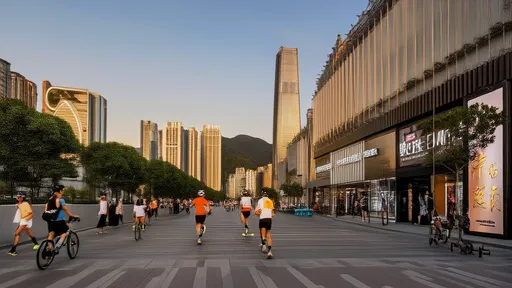
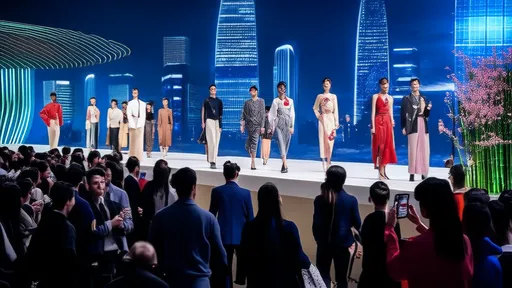
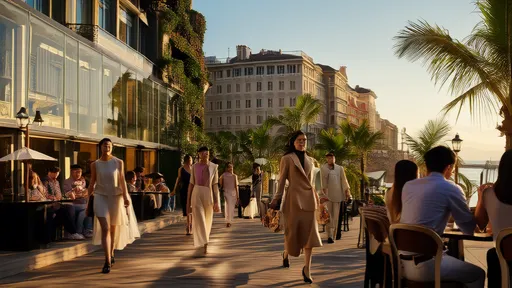
As dusk settles over Xiamen's coastline, the boundary between runway and cityscape begins to dissolve. The 2023 Xiamen Fashion Week has transformed this coastal city into a living catwalk where urban architecture merges with avant-garde design, creating what organizers describe as "city as scenery, people as tide" - a revolutionary approach to fashion presentation that redefines the relationship between clothing, citizens, and urban space.
The concept represents a fundamental shift from traditional fashion weeks confined to exhibition centers and luxury hotels. Here, against the backdrop of Xiamen's iconic Gulangyu Island and the modern skyline of Siming District, fashion becomes an organic element of the city's daily rhythm. The very streets where residents commute, the parks where children play, and the waterfront where couples stroll become integral components of the fashion narrative.
Urban Architecture as Living Backdrop
Xiamen's unique architectural heritage provides a stunning visual dialogue with contemporary fashion. The colonial-era buildings along Zhongshan Road, with their distinctive arcades and intricate facades, serve as natural runways for collections that explore the tension between tradition and modernity. Designers have deliberately incorporated these historical elements into their presentations, creating collections that respond to the city's architectural vocabulary.
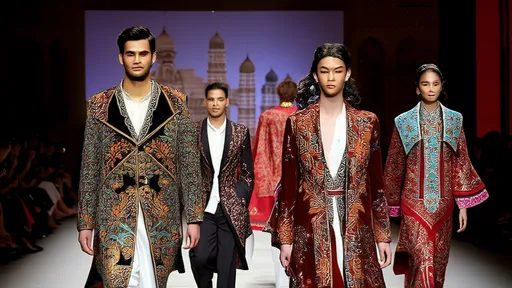
At the former British Consulate, now repurposed as a cultural space, rising designer Li Wen presented her "Coastal Memory" collection. The weathered stone walls and original wooden beams created a poignant contrast with her fluid silk garments, while the sea breeze drifting through open windows added an unpredictable element to the presentation. "The space isn't just a venue," Li explained backstage. "It's a collaborator. The way sunlight filters through these century-old windows at golden hour transforms the entire collection's appearance."
The Citizen as Fashion Medium
Perhaps the most revolutionary aspect of Xiamen's approach is its treatment of the city's inhabitants. Rather than reserving fashion events for industry insiders and celebrities, the organizers have actively integrated local residents into the fashion ecosystem. The "People as Tide" philosophy manifests in multiple initiatives that blur the line between spectator and participant.
During the weekend, the newly developed Ring Island Road becomes a spontaneous fashion district where residents proudly showcase their personal style alongside professional models. Grandmothers in traditional Minnan attire photograph teenagers wearing cutting-edge streetwear, creating generational dialogues through fashion. Local baker Chen Xiaoli, who attended three runway shows after her morning shift, embodies this spirit: "I never thought fashion week was for people like me. But seeing designs inspired by our local embroidery and fishing culture made me realize this is our story too."
The integration extends beyond observation. Through the "Wear Xiamen" program, hundreds of residents volunteered to model collections in their neighborhoods, bringing high fashion to grocery shopping, school runs, and afternoon tea. The resulting social media movement has generated over 50,000 posts with the hashtag #MyXiamenStyle, demonstrating how fashion can become a genuine expression of civic identity.
Fashion as Urban Commentary
Many designers have used their collections to engage with Xiamen's environmental consciousness and maritime heritage. Designer Mark Wang's "Ocean Guardian" collection, presented on a floating platform in Xiamen Bay, featured garments made from recycled fishing nets and plastic waste collected from local beaches. The dramatic setting, with city lights twinkling behind the models, underscored fashion's potential to address ecological concerns while celebrating coastal beauty.
Meanwhile, the "Island Memory" installation at Xiamen University transformed campus pathways into an interactive fashion experience. Students encountered garments suspended from banyan trees and textile art installations in courtyards, making fashion discovery an organic part of their daily routine. Professor Zhang Wei, who helped curate the project, noted: "When fashion leaves the controlled environment of a showroom and enters public space, it becomes a conversation with the city itself."
Economic Waves Beyond the Runway
The economic impact of this citizen-centric approach has been significant. Local businesses report increased foot traffic as fashion events spill into commercial districts. Café owner Huang Ming, whose establishment became an impromptu meeting point for designers and fashion enthusiasts, saw revenue increase by 40% during fashion week. "The boundaries between event venues and regular businesses have disappeared," Huang observed. "People come for fashion but stay for the entire Xiamen experience."
The tourism sector has similarly benefited, with hotels near fashion districts reporting near-capacity occupancy. Tour packages combining fashion events with cultural tours of Xiamen's UNESCO-recognized Kulangsu Island have proven particularly popular, demonstrating how fashion can enhance rather than overshadow a city's existing attractions.
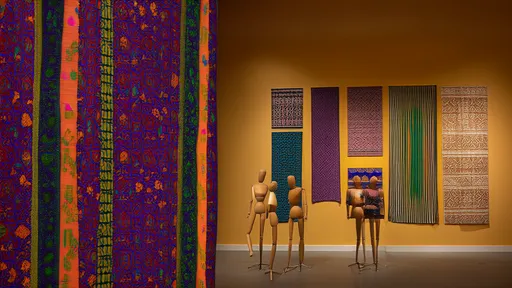
Local artisans and textile producers have found new markets through dedicated showcases within the fashion week program. The Minnan Embroidery Collective, representing traditional craftspeople from surrounding villages, secured orders from three international retailers after their collaborative presentation with contemporary designers. "This platform has given centuries-old techniques relevance in modern fashion," said collective director Madame Lin.
The Cultural Tide Rises
Beyond economic metrics, the fashion week has sparked a renewed interest in Xiamen's cultural identity among younger residents. University students have launched fashion clubs focused on researching and modernizing traditional Minnan clothing elements. Local designers report increased demand for pieces that incorporate Xiamen's distinctive visual heritage, from intricate fish-scale patterns to colors inspired by the region's distinctive "Amoy Blue" sky.
The fashion week's educational programs have reached over 5,000 students through school visits and workshops. At Xiamen No. 1 Middle School, students participated in a design competition creating modern interpretations of the qipao using local textiles. "We're not just watching fashion," said 16-year-old participant Lin Jia. "We're learning how to tell our city's story through what we wear."
This cultural awakening extends to preservation efforts. The success of fashion presentations in historical buildings has prompted new discussions about adaptive reuse of Xiamen's architectural heritage. Property developers have begun consulting with designers on integrating traditional elements into new constructions, recognizing the commercial value of cultural authenticity.
Sustainable Currents
Environmental responsibility has emerged as a unexpected but powerful theme. The distributed nature of the fashion week, with events occurring within walking distance of each other, has minimized transportation needs. Many participants have embraced the "Xiamen Stroll" concept, exploring fashion installations while enjoying the city's pedestrian-friendly infrastructure.
Several designers have committed to sustainable practices after witnessing the city's conservation efforts. The "Xiamen Fashion Pact," launched during the week, has garnered signatures from 28 brands pledging to reduce waste and incorporate eco-friendly materials. "Seeing how carefully Xiamen balances development with environmental protection inspired us to do better," said signatory designer Elena Torres.
The municipal government has noted the fashion week's role in promoting green initiatives. "Fashion has become an unexpected ally in our sustainability efforts," commented Cultural Bureau director Wang Li. "When visitors see beautiful designs made from recycled materials against our clean beaches and clear skies, the message about environmental protection becomes more powerful."
The Future of Urban Fashion Narratives
As Xiamen Fashion Week concludes, its impact continues to ripple through the city. The success of the "city as scenery, people as tide" approach has attracted attention from urban planners and cultural ministers worldwide. The model demonstrates how fashion events can enhance rather than disrupt urban life, creating economic opportunities while strengthening community bonds.
For Xiamen residents, the boundaries between special occasion and daily life have been permanently blurred. The fashionable grandmothers of Zhongshan Road, the style-conscious students of Xiamen University, and the creatively dressed café staff throughout the city have become permanent fixtures in Xiamen's fashion narrative. As local designer James Yuan reflected: "The real success isn't measured in press coverage or buyer orders, but in seeing our designs become part of the city's living fabric."
The tide of people flowing through Xiamen's streets has indeed become the most dynamic element of its fashion story, proving that when citizens become co-creators rather than mere spectators, fashion transforms from seasonal spectacle into enduring urban poetry.

By /Oct 23, 2025

By Michael Brown/Oct 23, 2025
By /Oct 23, 2025
By /Oct 23, 2025

By /Oct 23, 2025

By /Oct 23, 2025
By /Oct 23, 2025
By /Oct 23, 2025

By Samuel Cooper/Oct 23, 2025
By /Oct 23, 2025
By /Oct 23, 2025

By /Oct 23, 2025

By /Oct 23, 2025
By /Oct 23, 2025

By Daniel Scott/Oct 23, 2025

By /Oct 23, 2025

By /Oct 23, 2025

By /Oct 23, 2025
By /Oct 23, 2025
By /Oct 23, 2025