In the ever-evolving landscape of fashion, where trends often flicker and fade with the seasons, a surprising and profound inspiration has emerged from the archives of grunge royalty. Max Mara, the Italian luxury house renowned for its timeless elegance and sophisticated outerwear, has delved into the sartorial world of Kurt Cobain, the iconic frontman of Nirvana. The result is a collection of cocoon coats that masterfully blend the raw, rebellious energy of 90s grunge with the brand's signature architectural precision and luxurious fabrications. This unexpected fusion challenges conventional fashion narratives, creating a dialogue between high luxury and counter-cultural expression that resonates deeply in our current era.
The very notion of Max Mara finding muse in Kurt Cobain is, on its surface, a study in contrasts. Max Mara epitomizes a certain kind of polished, almost cerebral luxury. Its creations—particularly the now-legendary camel hair coats—are investments in enduring style, pieces that speak to quiet confidence and refined taste. Kurt Cobain, however, was the avatar of a different ethos entirely. His style was an uncurated, visceral expression of disillusionment and authenticity. He was often photographed in thrift-store cardigans, ripped jeans, striped long-sleeves under band t-shirts, and an array of shabby, layered knits. His was a uniform of anti-fashion, a deliberate rejection of the glossy, manufactured aesthetics of the 1980s. It was personal, messy, and powerfully resonant.
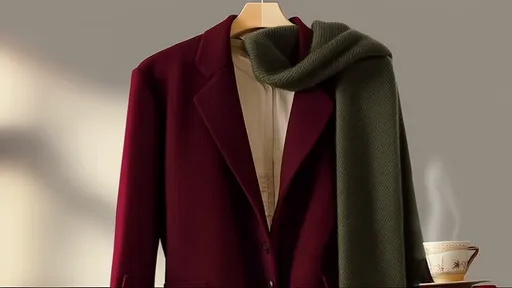
So, how does a design house known for its immaculate tailoring and cohesive color palettes translate this spirit of anarchic individuality? The answer lies not in literal interpretation, but in a more abstract distillation of Cobain's essence. The key piece in this sartorial conversation is the cocoon coat. With its rounded, enveloping silhouette, generous volume, and lack of a defined waist, the cocoon shape is a departure from the structured, body-conscious coats that have long dominated winter wardrobes. It offers a sense of protection and introversion, a sartorial hug that recalls the comfort and anonymity Cobain often sought in his oversized, layered garments. He didn't wear clothes to impress; he wore them as a shield, as a second skin. The Max Mara cocoon coat captures this same feeling of insulated sanctuary.
The genius of Max Mara's interpretation is in its material and color story. Where Cobain's sweaters were often worn, faded, and textured with pilling, Max Mara employs the most sumptuous of fabrics. Think heavyweight cashmere, double-faced wool, and alpaca blends that feel like a cloud against the skin. The colors, while often rooted in the brand's classic neutrals—camel, charcoal grey, oat—are sometimes infused with a grunge-adjacent sensibility. A deep, murky plum echoes the dye of a faded flannel; a slate green recalls the Pacific Northwest landscape. The texture is paramount. Some coats feature a felted, almost matte finish that subtly references the humble, nubby quality of a well-worn knit, but elevates it to an object of pure luxury.
This collection does more than just borrow a silhouette; it engages with the very philosophy of Cobain's dressing. His style was inherently androgynous and inclusive. He wore cardigans and dresses with the same nonchalant defiance, blurring the lines of gendered dressing in a way that was revolutionary for its time. The Max Mara cocoon coat, in its voluminous, shape-obscuring form, continues this legacy. It is a profoundly democratic garment. It drapes beautifully on a diverse range of body types, not by clinging to curves, but by creating a new, architectural form altogether. It empowers the wearer not through overt sex appeal, but through a commanding, enigmatic presence. It is a coat that says, "I am here, but my mysteries are my own."
Styling these cocoon coats within the context of the collection further reveals the Cobain influence. While one might traditionally pair such a luxurious item with tailored trousers and heels, the Max Mara lookbooks suggest a different path. They are shown thrown over slouchy, destroyed-hem jeans, layered atop chunky, cable-knit turtlenecks, or even worn with heavy-duty combat boots. This is a direct nod to the grunge aesthetic of high-low mixing, where a precious item is deliberately contrasted with something utilitarian or rough. It’s a styling technique that feels utterly contemporary, speaking to a generation that values authenticity and personal expression over rigid dress codes. The message is that this coat is not a fragile museum piece; it is a living, breathing part of a modern wardrobe, meant to be lived in and personalized.
The cultural timing of this inspiration is particularly astute. We are living in a neo-grunge moment, where the themes of the early 90s—disillusionment with established systems, a yearning for raw honesty, a celebration of the imperfect—feel strikingly relevant. Furthermore, the pandemic has irrevocably shifted our relationship with clothing. Comfort, ease, and a sense of personal protection have become paramount. The cocoon coat, inspired by a figure who valued emotional shelter, perfectly answers this new desire. It is a garment that provides both physical warmth and a psychological sense of security, a luxury that is as much about feeling as it is about appearance.
Ultimately, Max Mara's foray into the world of Kurt Cobain is a masterclass in how inspiration can be both specific and transformative. It is not about creating a costume or a literal homage. Instead, it is about capturing a feeling, an attitude, a rebellious spirit, and then filtering it through the brand's own impeccable lens of quality and design. The resulting cocoon coats are more than just winter outerwear; they are wearable essays on the enduring power of authenticity. They prove that true style is timeless and transcendent, capable of drawing a direct line from the mosh pits of Seattle to the ateliers of Italy, creating a garment that is, paradoxically, both a sanctuary and a statement.

By /Oct 23, 2025

By Michael Brown/Oct 23, 2025

By /Oct 23, 2025

By /Oct 23, 2025

By /Oct 23, 2025

By /Oct 23, 2025
By /Oct 23, 2025
By /Oct 23, 2025

By Samuel Cooper/Oct 23, 2025

By /Oct 23, 2025
By /Oct 23, 2025

By /Oct 23, 2025

By /Oct 23, 2025

By /Oct 23, 2025

By Daniel Scott/Oct 23, 2025

By /Oct 23, 2025

By /Oct 23, 2025

By /Oct 23, 2025
By /Oct 23, 2025

By /Oct 23, 2025