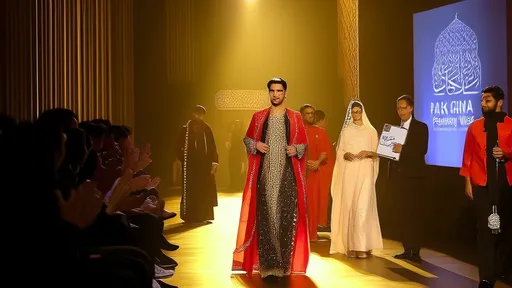
In the ever-evolving landscape of contemporary fashion, few moments capture the industry's imagination quite like the debut of a groundbreaking collection. The recent unveiling of Muazzam Abbasi's Ajrak-inspired thematic series has sent ripples through the global fashion community, marking a significant milestone in the fusion of traditional craftsmanship with modern design sensibilities. The collection, presented during fashion week to an audience of discerning critics and enthusiasts alike, represents more than just seasonal trends—it embodies a cultural dialogue between heritage and innovation.
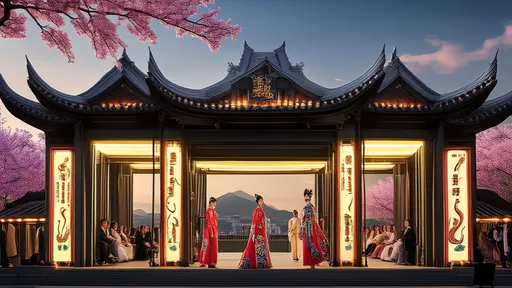
The runway presentation began with an atmospheric blend of traditional Sufi music gradually transitioning into contemporary arrangements, setting the stage for what would become a sartorial journey through time and culture. As the first model emerged, draped in a breathtaking ensemble featuring the distinctive geometric patterns of Ajrak, the audience witnessed the birth of what many are already calling Abbasi's magnum opus. The collection's profound connection to Sindhi cultural heritage was immediately apparent, yet the execution demonstrated a sophisticated understanding of global fashion aesthetics.
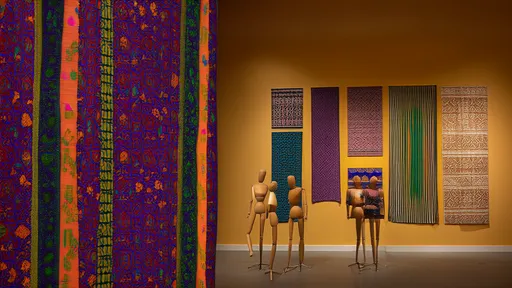
Ajrak, for the uninitiated, is not merely a textile but a centuries-old tradition deeply embedded in the cultural fabric of the Sindh region. The intricate block-printing technique, characterized by its complex geometric patterns and rich indigo hues, has been passed down through generations of artisans. What makes Abbasi's interpretation particularly remarkable is his ability to maintain the authenticity of these traditional methods while recontextualizing them for contemporary wearability. Each piece in the collection tells a story of cultural preservation meeting modern luxury.
The color palette throughout the collection remained faithful to Ajrak's traditional roots while introducing subtle contemporary variations. Deep indigos and crimson reds—colors historically significant in Ajrak symbolism—dominated the collection, representing the sky and earth respectively. However, Abbasi skillfully introduced muted tones and unexpected color combinations that gave the traditional patterns new life. The interplay between the classic Ajrak colors and these contemporary shades created a visual dialogue that felt both timeless and refreshingly modern.
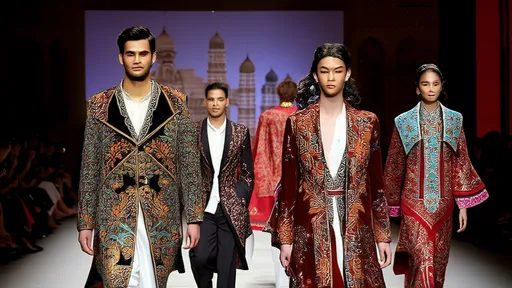
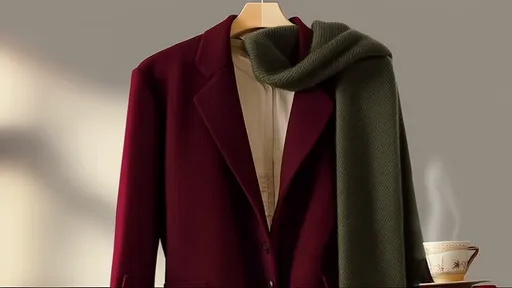
What truly set this collection apart was the innovative use of fabrics and silhouettes. While traditional Ajrak is typically printed on cotton, Abbasi experimented with luxurious materials including silk georgette, chiffon, and even leather. The juxtaposition of these premium fabrics with the rustic charm of Ajrak patterns created a textural richness that elevated the entire collection. Flowing maxi dresses featured delicate Ajrak prints that seemed to dance with the models' movements, while structured blazers incorporated the patterns in more subtle, sophisticated ways.
The menswear offerings in the collection demonstrated Abbasi's versatility as a designer. Traditional kurta silhouettes were reimagined with contemporary cuts and tailoring, while maintaining the integrity of the Ajrak patterns. The inclusion of Ajrak-printed accessories—from statement scarves to elegant pocket squares—provided accessible entry points for consumers looking to incorporate elements of the collection into their existing wardrobes. This strategic approach to design demonstrates Abbasi's understanding of market dynamics while staying true to his artistic vision.
Beyond the aesthetic considerations, the collection represents a significant step forward in the conversation about cultural appropriation versus appreciation in fashion. Abbasi, who hails from the region where Ajrak originated, has consistently worked directly with traditional artisans throughout the development process. This collaborative approach not only ensures authenticity but also provides economic opportunities for the craftspeople preserving this ancient art form. The collection serves as a powerful example of how fashion can honor cultural traditions while pushing creative boundaries.
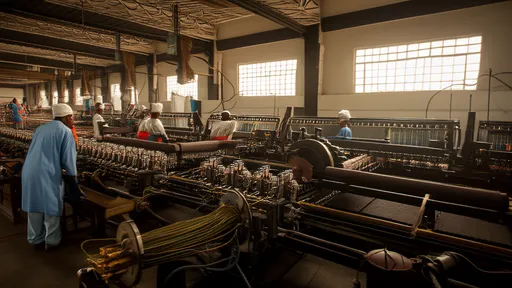
The technical execution of the prints deserves particular attention. Traditional Ajrak printing involves a labor-intensive process requiring multiple stages of washing, printing, and drying that can take up to three weeks for a single piece of fabric. Abbasi's team worked closely with master artisans to adapt these techniques for larger-scale production without compromising quality. The result is a collection where every print tells a story of meticulous craftsmanship, from the precision of the geometric patterns to the depth of the natural dyes.
Social media response to the collection has been overwhelmingly positive, with fashion influencers and cultural commentators alike praising Abbasi's sensitive yet innovative approach. The hashtag #AbbasiAjrak has been trending across platforms, with particular attention being paid to the collection's potential impact on the preservation of traditional crafts. Many have noted how the collection makes traditional patterns feel relevant and desirable to younger generations who might otherwise view them as outdated or provincial.
Industry insiders have been particularly impressed with the commercial viability of the collection. While many designer collaborations with traditional crafts risk becoming niche or conceptual, Abbasi has managed to create pieces that feel both special and wearable. The pricing strategy, while positioning the collection firmly in the luxury market, includes accessible pieces that could introduce new consumers to both the designer's work and Ajrak craftsmanship. This balanced approach suggests a thoughtful consideration of how to make cultural fashion sustainable in the commercial landscape.
The global implications of this collection cannot be overstated. At a time when the fashion industry faces increasing scrutiny regarding its environmental impact and cultural sensitivity, Abbasi's Ajrak series offers a blueprint for responsible yet innovative design. The use of natural dyes and traditional production methods aligns with growing consumer demand for sustainable fashion, while the cultural authenticity addresses concerns about appropriation. International buyers have expressed strong interest, suggesting that the collection may help position Pakistani fashion on the global stage in a new and significant way.
Looking beyond the immediate impact, the success of this collection could have far-reaching effects for the preservation of traditional crafts worldwide. By demonstrating how ancient techniques can be successfully integrated into contemporary luxury fashion, Abbasi has created a model that other designers might follow. The economic benefits for the artisans involved could help ensure that these skills are passed to future generations, preventing the loss of cultural heritage that often accompanies modernization.
Fashion historians will likely look back on this collection as a turning point in the relationship between traditional crafts and high fashion. Abbasi has managed to avoid the common pitfalls of either treating traditional elements as mere decorative motifs or creating costumes rather than contemporary fashion. Instead, he has achieved a synthesis that respects the past while embracing the future. The collection doesn't just use Ajrak patterns—it understands and honors their cultural significance while reimagining their potential.
As the fashion world continues to digest the impact of this remarkable collection, one thing seems certain: Muazzam Abbasi has not only created beautiful clothing but has moved the conversation about cultural fashion forward in meaningful ways. The Ajrak thematic series stands as a testament to what can be achieved when designers approach traditional crafts with respect, innovation, and genuine collaboration. In an industry often criticized for its ephemeral nature, this collection feels like something that will endure—both as wearable art and as a milestone in fashion's ongoing evolution.
The legacy of this collection may extend far beyond seasonal trends. By successfully bridging the gap between traditional craftsmanship and contemporary design, Abbasi has created a new paradigm for what cultural fashion can achieve. The pieces serve as ambassadors for a rich cultural heritage while standing firmly as examples of sophisticated modern design. As consumers increasingly seek meaning and authenticity in their purchases, collections like this suggest a promising direction for the future of fashion—one where beauty, culture, and commerce can coexist in harmonious balance.

By /Oct 23, 2025

By Michael Brown/Oct 23, 2025

By /Oct 23, 2025

By /Oct 23, 2025

By /Oct 23, 2025
By /Oct 23, 2025
By /Oct 23, 2025
By /Oct 23, 2025

By Samuel Cooper/Oct 23, 2025

By /Oct 23, 2025
By /Oct 23, 2025

By /Oct 23, 2025

By /Oct 23, 2025

By /Oct 23, 2025

By Daniel Scott/Oct 23, 2025

By /Oct 23, 2025

By /Oct 23, 2025

By /Oct 23, 2025
By /Oct 23, 2025
By /Oct 23, 2025