Pakistan's textile industry stands at a critical juncture, facing challenges that could redefine its global competitiveness. The sector, which contributes significantly to the nation's exports and employment, is grappling with two fundamental issues: unreliable energy supply and outdated machinery. These obstacles are not merely operational hiccups but structural weaknesses that threaten to erode Pakistan's position in the international textile market.
The energy crisis has been a persistent thorn in the side of textile manufacturers. Factories across Punjab and Sindh frequently experience power outages that disrupt production cycles and increase operational costs. Many textile units have been forced to invest in expensive backup power systems, driving up their production expenses and making them less competitive against regional rivals like Bangladesh and Vietnam. The situation becomes particularly dire during peak summer months when electricity demand surges and supply constraints tighten further.
Natural gas shortages present another dimension to the energy challenge. Numerous textile processing units rely on consistent gas supply for their dyeing, printing, and finishing operations. When gas pressure drops or supply is completely cut off, these processes come to a halt, leading to missed deadlines and quality inconsistencies. The cumulative effect of these energy disruptions is substantial – industry experts estimate that Pakistan's textile sector loses billions of rupees annually due to production delays and increased energy costs.
Beyond immediate power issues, the sector's infrastructure for energy distribution requires significant upgrading. Many industrial zones lack the modern grid infrastructure needed to support consistent, high-quality power supply. Transmission losses and voltage fluctuations damage sensitive textile machinery, leading to additional maintenance costs and reduced equipment lifespan. Without comprehensive energy sector reforms and infrastructure investments, Pakistani textile manufacturers will continue to operate at a disadvantage compared to their international counterparts.
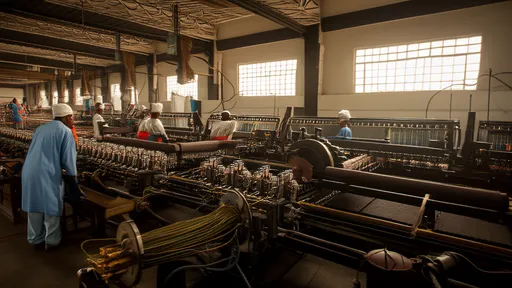
The second major challenge – outdated machinery – represents an equally pressing concern. A significant portion of Pakistan's textile machinery has been in operation for decades, unable to match the efficiency and productivity of modern equipment found in competing nations. While countries like China and India have aggressively modernized their textile manufacturing infrastructure, Pakistan's capital investment in new technology has lagged behind, creating a growing technological gap that affects both quality and output.
Spinning mills, the backbone of the textile value chain, particularly suffer from aging equipment. Many still operate with machinery that consumes excessive energy while producing lower-quality yarns. The ring spinning frames common in Pakistani mills cannot compete with the rotor spinning and air-jet spinning technologies increasingly adopted elsewhere. This technological disparity results in higher production costs per unit and inferior product quality that fails to meet the exacting standards of international buyers.
Weaving and knitting sectors face similar challenges. Conventional shuttle looms, still prevalent in many Pakistani units, operate at significantly slower speeds than modern rapier or air-jet looms. The productivity difference is stark – where advanced looms can produce fabric at rates exceeding 1,000 meters per hour, traditional equipment struggles to achieve half that output. This efficiency gap directly impacts profitability and capacity utilization, limiting the industry's ability to scale production for large international orders.
Processing and finishing units, which add value to textiles through dyeing, printing, and special treatments, also operate with outdated technology. Many lack computer-controlled systems for precise color matching and consistency, resulting in product variations that international buyers find unacceptable. Water and energy consumption in these processes remains excessively high compared to modern facilities that utilize closed-loop systems and heat recovery technologies.
The financial constraints facing textile manufacturers complicate machinery upgrades. High interest rates and limited access to long-term financing make capital investments in new equipment particularly challenging for small and medium enterprises that dominate the sector. Many mill owners find themselves caught in a vicious cycle – they need modern machinery to improve profitability, but cannot generate sufficient profits to fund the necessary upgrades under current market conditions.
Government policies have attempted to address these challenges, though with limited success. Various incentive schemes for machinery imports and energy subsidies have provided temporary relief but failed to catalyze the comprehensive modernization the sector requires. The lack of consistent, long-term industrial policy has created uncertainty that discourages major investment decisions. Textile entrepreneurs hesitate to commit substantial resources to upgrades without assurance of stable energy supply and supportive government policies over the longer term.
The technological gap extends beyond machinery to include digitalization and automation. Pakistani textile units generally lack the sophisticated software systems for inventory management, production planning, and quality control that have become standard in modern textile manufacturing. This digital divide affects everything from supply chain efficiency to the ability to quickly respond to changing market demands and customization requests from international clients.
Workforce skill development represents another dimension of the modernization challenge. Operating advanced textile machinery requires technical expertise that many current workers lack. Without comprehensive training programs and knowledge transfer initiatives, even new machinery investments may fail to deliver their full potential due to operational inefficiencies and maintenance issues. The industry needs parallel investments in human capital development to complement technological upgrades.
Regional competitors have demonstrated how addressing these twin challenges can transform textile industries. Bangladesh's focused investment in energy infrastructure and machinery modernization, supported by favorable government policies, has propelled its rapid growth in global textile exports. Vietnam has similarly leveraged strategic investments to become a preferred sourcing destination for major international brands. Pakistan must learn from these success stories while developing solutions tailored to its specific context.
Immediate measures could include establishing dedicated industrial power feeders with guaranteed supply, creating specialized financing windows for machinery upgrades, and developing textile-specific industrial zones with modern infrastructure. Medium-term strategies should focus on developing renewable energy sources for the textile sector, promoting joint ventures with international technology providers, and establishing centers of excellence for textile technology and skills development.
The path forward requires coordinated action from multiple stakeholders. Textile industry associations must advocate more effectively for policy reforms while encouraging collective action on modernization. Financial institutions need to develop innovative financing products tailored to machinery upgrades. Educational institutions should align their curricula with industry needs to produce graduates equipped with relevant technical skills. Most importantly, the government must provide the policy stability and infrastructure support necessary to restore investor confidence in the sector.
Pakistan's textile industry possesses inherent advantages – abundant raw cotton production, strategic geographic location, and generations of textile manufacturing expertise. Addressing the energy and machinery challenges could unleash this potential, creating jobs, boosting exports, and contributing significantly to economic growth. The window of opportunity remains open, but decisive action is needed before competitors consolidate their advantages further and global market dynamics shift irreversibly.

By /Oct 23, 2025

By Michael Brown/Oct 23, 2025

By /Oct 23, 2025

By /Oct 23, 2025

By /Oct 23, 2025

By /Oct 23, 2025

By /Oct 23, 2025

By /Oct 23, 2025

By Samuel Cooper/Oct 23, 2025

By /Oct 23, 2025

By /Oct 23, 2025

By /Oct 23, 2025

By /Oct 23, 2025

By /Oct 23, 2025

By Daniel Scott/Oct 23, 2025

By /Oct 23, 2025

By /Oct 23, 2025

By /Oct 23, 2025

By /Oct 23, 2025
By /Oct 23, 2025