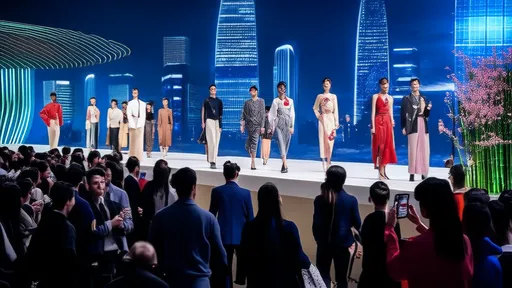
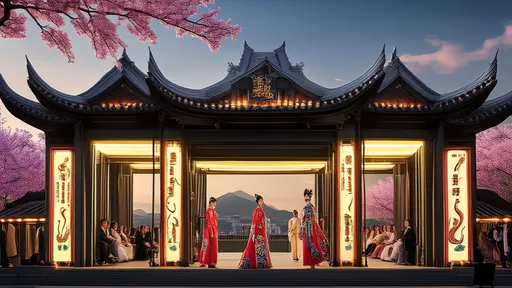
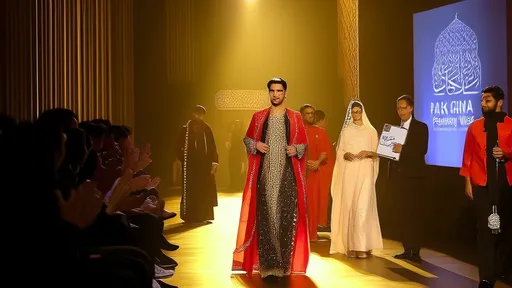
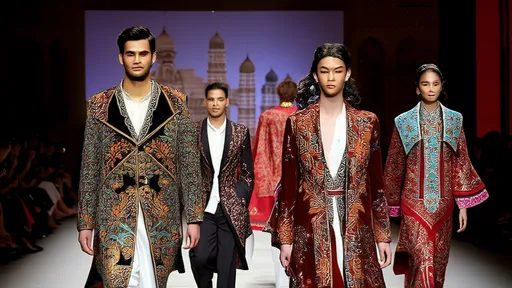
In a spectacular fusion of Eastern elegance and South Asian vibrancy, the China-Pakistan Fashion Show witnessed the breathtaking debut of Liang Suyun's "Yun Shang Hua Fu" collection, marking a significant milestone in cross-cultural fashion diplomacy. The runway came alive with exquisite craftsmanship that transcended geographical boundaries, showcasing how traditional Chinese aesthetics can converse beautifully with contemporary global fashion sensibilities. Held at the prestigious Pakistan National Council of Arts in Islamabad, the event drew fashion connoisseurs, diplomats, and cultural enthusiasts who marveled at the seamless integration of two rich cultural heritages through the universal language of design.
The collection's name, "Yun Shang Hua Fu", which translates to "Cloud Clothing and Magnificent Attire," perfectly captured the ethereal quality and regal sophistication that defined each piece. Liang Suyun, renowned for her mastery in reinventing traditional Chinese elements for modern wearability, presented thirty-five distinct looks that ranged from daytime elegance to evening grandeur. What made this collection particularly remarkable was its thoughtful incorporation of Pakistani textile traditions while maintaining the distinct Chinese aesthetic that has become Liang's signature. The designer spent six months researching Central Asian and South Asian clothing history, consulting with local artisans in both countries to ensure cultural authenticity and respect.
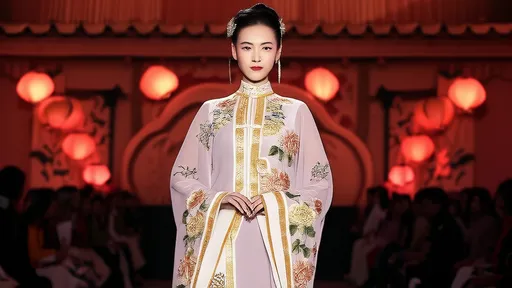
Opening the show was a stunning qipao-inspired gown crafted from Pakistani chiffon, featuring delicate hand-embroidery that combined Chinese phoenix motifs with traditional Pakistani mirror work. The gown moved with liquid grace as the model walked, the lightweight fabric catching the light in a way that made the metallic threads shimmer like morning dew on silk. This initial piece set the tone for the entire collection – a harmonious dialogue between cultures where neither dominated but rather enhanced the other's beauty. Fashion critics noted how the collection managed to feel simultaneously ancient and contemporary, as if centuries of cultural exchange had been distilled into each garment.
Among the standout pieces was a contemporary interpretation of the Chinese hanfu that incorporated the vibrant color palette characteristic of Pakistani fashion. Where traditional hanfu typically features more subdued tones, Liang's version celebrated the jewel tones popular in South Asian attire – deep emeralds, ruby reds, and sapphire blues – while maintaining the graceful, flowing silhouettes of classical Chinese design. The fusion extended to the accessories, where jade ornaments were paired with intricate metalwork reminiscent of traditional Pakistani jewelry, creating a look that felt both familiar and entirely new.
The technical innovation displayed throughout the collection drew particular admiration from industry professionals. Liang collaborated with textile engineers to develop hybrid fabrics that combined Chinese silk with Pakistani cotton, resulting in materials that offered both the luxurious drape of silk and the practical comfort of cotton for warmer climates. This practical consideration demonstrated the designer's commitment to creating wearable art rather than merely conceptual pieces. Several garments featured temperature-responsive fabrics that adapted to changing conditions, a nod to the varying climates across China and Pakistan.
Cultural symbolism played a crucial role in the collection's narrative. The dragon and phoenix motifs, traditionally representing imperial power and harmony in Chinese culture, were reinterpreted using patterns found in Mughal architecture, creating a visual language that spoke to both traditions. Similarly, the cloud patterns that adorned many pieces – a recurring element in Chinese art symbolizing luck and heaven – were rendered using techniques from Pakistani miniature painting. This thoughtful blending of symbols created layers of meaning that resonated differently with viewers depending on their cultural background, yet maintained universal appeal through their beauty.
The response from the audience was overwhelmingly positive, with multiple standing ovations throughout the presentation. Pakistani fashion designer Rizwan Ahmed commented, "What Liang has achieved here is more than just beautiful clothing – she has created a bridge between our cultures. Each piece tells a story of mutual respect and shared aesthetics. I've never seen Chinese design elements integrated so naturally with South Asian sensibilities." The sentiment was echoed by Chinese diplomats present, who saw the collection as a powerful tool for cultural diplomacy and soft power projection.
Beyond the runway, the collection sparked important conversations about the future of cultural exchange in fashion. In an industry often criticized for cultural appropriation, Liang's approach demonstrated how cross-cultural collaboration should work – with deep research, mutual respect, and genuine partnership. The designer worked closely with Pakistani artisans throughout the creation process, ensuring that traditional techniques were represented accurately and that local craftspeople benefited from the collaboration. This ethical dimension added depth to the collection's significance, positioning it as a model for future international fashion partnerships.
The business implications of this cross-cultural venture are equally promising. Several major retailers from both countries have expressed interest in carrying limited edition pieces from the collection, recognizing the growing market for culturally sophisticated fashion. Industry analysts predict that successful collaborations like this could open new avenues for Sino-Pakistani trade in creative industries beyond traditional sectors. The timing coincides with increased economic cooperation under the China-Pakistan Economic Corridor, suggesting that fashion may become an unexpected but valuable component of broader bilateral relations.
For Liang Suyun, this collection represents both an artistic evolution and a personal journey. In post-show interviews, she revealed that her inspiration came from the ancient Silk Road, which once connected China to Central and South Asia. "I wanted to create a modern Silk Road in fashion," she explained, "where ideas and aesthetics could travel between cultures just as they did centuries ago, but with contemporary relevance. The connection between China and Pakistan runs deep historically, and fashion provides a beautiful medium to express that continued relationship."
The educational aspect of the collection should not be overlooked. Each piece came with detailed notes explaining the cultural references and techniques used, turning the fashion show into an immersive learning experience. This approach helped audience members appreciate the depth of thought behind each design decision and understand the cultural significance of elements they might otherwise have missed. Several fashion schools from both countries have already requested to use the collection as a case study in cross-cultural design.
As the fashion world becomes increasingly globalized, collections like "Yun Shang Hua Fu" point toward a more inclusive and thoughtful future. Rather than homogenizing cultural differences, Liang has shown how they can be celebrated and integrated in ways that honor their origins while creating something new. The success of this approach suggests that consumers are hungry for fashion with cultural authenticity and narrative depth, moving beyond superficial trends toward more meaningful sartorial expressions.
The impact of this collection extends beyond the runway show itself. Social media response has been overwhelmingly positive, with the hashtag #ChinaPakistanFashion trending for two days following the event. Young fashion enthusiasts from both countries have particularly embraced the collection, seeing it as representing a modern, global Asian identity that transcends national boundaries while respecting cultural specifics. This generational response indicates a shifting perception of cultural identity among youth, who increasingly see themselves as both locally rooted and globally connected.
Looking forward, the "Yun Shang Hua Fu" collection establishes a new benchmark for cross-cultural fashion collaborations. Its commercial success and critical acclaim demonstrate that there is substantial appetite for designs that bridge cultural divides with sensitivity and creativity. The collection's scheduled exhibitions in Beijing, Shanghai, and Karachi will likely amplify its impact, potentially inspiring a new generation of designers to explore the rich possibilities of cultural fusion. As fashion continues to evolve as a global language, Liang Suyun's work provides a masterclass in how to speak it with elegance, respect, and innovation.
Ultimately, the significance of Liang Suyun's presentation at the China-Pakistan Fashion Show extends far beyond the garments themselves. It represents a growing recognition within the fashion industry that cultural exchange, when approached with genuine curiosity and respect, can produce works of extraordinary beauty and commercial viability. In an era of increasing globalization coupled with cultural nationalism, the collection offers a compelling vision of how nations can maintain their distinct identities while creating something beautiful together. The "Yun Shang Hua Fu" collection doesn't just clothe the body – it dresses the possibility of a more culturally connected world.

By /Oct 23, 2025

By Michael Brown/Oct 23, 2025
By /Oct 23, 2025
By /Oct 23, 2025
By /Oct 23, 2025
By /Oct 23, 2025
By /Oct 23, 2025
By /Oct 23, 2025
By Samuel Cooper/Oct 23, 2025
By /Oct 23, 2025
By /Oct 23, 2025

By /Oct 23, 2025
By /Oct 23, 2025
By /Oct 23, 2025
By Daniel Scott/Oct 23, 2025
By /Oct 23, 2025
By /Oct 23, 2025
By /Oct 23, 2025
By /Oct 23, 2025
By /Oct 23, 2025