In the ever-evolving landscape of fashion collaborations, few partnerships have generated as much anticipation and intellectual curiosity as the union between H&M and Glenn Martens. This isn't merely another high-street-meets-high-fashion affair; it is a profound dialogue between past and present, a sartorial conversation where H&M's vast archival repository provides the vocabulary for Martens' distinct dialect of design. The collection, slated for a global release that has the industry holding its breath, represents a significant pivot in how fast-fashion giants are re-contextualizing their own histories to forge a more thoughtful future.
The concept of "mining the archives" has become something of a fashion cliché, often used to describe a superficial glance backward. However, under Martens' meticulous direction, this process has been transformed into a deep archaeological dig. For months, the designer and his team were granted unprecedented access to H&M's historical collections, stored in a climate-controlled facility that serves as the brand's institutional memory. Here, amidst racks of garments dating back decades, Martens didn't just look for aesthetic inspiration; he sought out construction techniques, forgotten fabric experiments, and the very DNA of H&M's design evolution. He was less a tourist in this archive and more a translator, interpreting the whispers of past trends into the loud, confident statement of contemporary wear.
Glenn Martens, the visionary behind both Y/Project and Diesel's acclaimed revival, is an architect of clothing. His signature lies in deconstruction, volume, and a playful, almost cerebral approach to how a garment interacts with the body. He designs for movement, for transformation, and for a generation that views clothing as an extension of personality rather than a uniform. This collaboration, therefore, was never going to be about simply reissuing old H&M pieces. Instead, Martens has taken foundational elements—a classic trench coat, a humble denim jacket, a simple jersey dress—and subjected them to his unique design philosophy. The result is a collection that feels both familiar and startlingly new, a testament to his ability to see the future potential in past forms.
The creative process was a true fusion of two distinct worlds. H&M's archives provided a treasure trove of raw material. Martens was particularly drawn to the late 90s and early 2000s eras, periods defined by a certain boldness and experimentation in casual wear. He found inspiration in the exaggerated silhouettes of cargo pants, the layering techniques of that time, and the specific shade of indigo used in denim from 2002. These elements were not copied but were used as a starting point for innovation. In the atelier, H&M's technical teams, masters of scalability and production, worked hand-in-hand with Martens' studio, known for its couture-like approach to detail. This synergy between high-volume capability and avant-garde creativity is the engine of this collaboration.
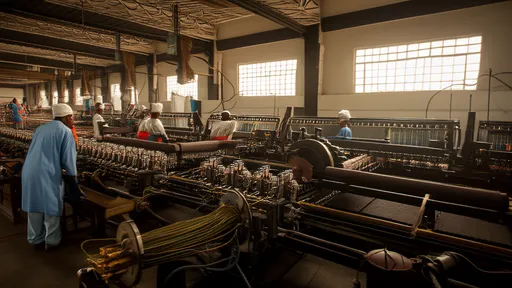
One of the most compelling aspects of the collection is its material narrative. Sustainability, a pressing concern for both brands and consumers, is woven directly into the fabric of the garments—literally. Martens insisted on a rigorous approach to material sourcing. Many pieces are crafted from recycled materials, including polyester derived from plastic bottles and regenerated cotton. Furthermore, deadstock fabric from H&M's previous seasons was repurposed and given new life, a practice that directly aligns with Martens' ethos of resourcefulness. This isn't just a token gesture; it's a core principle of the collection, demonstrating that high-impact design and responsible practices are not mutually exclusive. The textures tell a story of their own—brushed cottons that feel nostalgically soft, technical fabrics with a futuristic sheen, and denim that has been treated to achieve a uniquely lived-in character from day one.
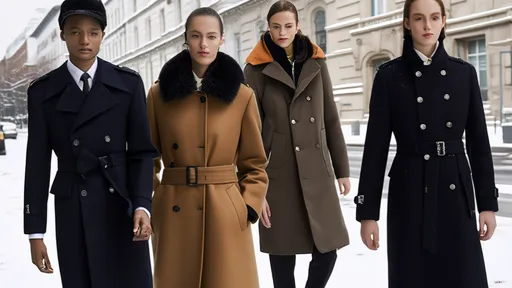
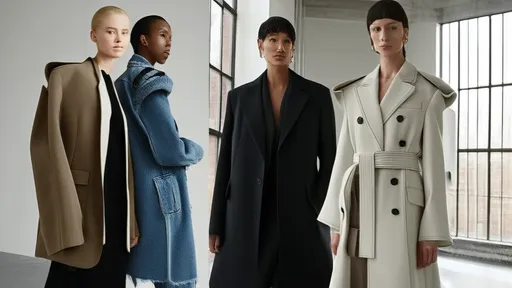
The silhouette of the collection is a masterclass in controlled chaos, a hallmark of Martens' work. Trench coats are reimagined with asymmetrical hems and convertible collars that can be styled in multiple ways. Denim, a cornerstone for both H&M and Martens, is pushed to its limits. Jeans feature twisted seams and trompe-l'oeil effects, while denim jackets are deconstructed and reassembled with extra sleeves or layered panels, creating a dynamic, multi-dimensional garment. Evening wear, a surprising and welcome inclusion, features slinky jersey dresses that are intricately draped and knotted, referencing archival H&M party wear but elevating it with a sophisticated, sculptural quality. The entire range plays with proportion, volume, and a sense of kinetic energy, ensuring that each piece is not just worn but performed.
This collaboration arrives at a critical juncture for the fashion industry. Consumers are increasingly disillusioned with disposable trends and are seeking depth, story, and longevity from their purchases. The H&M x Glenn Martens collection directly addresses this shift. By rooting itself in the brand's own history, it offers a narrative that goes beyond mere novelty. It invites the wearer to be part of a continuum, to engage with fashion as an evolving cultural artifact. For H&M, this partnership is a strategic move to elevate its brand perception, proving that it can be a custodian of fashion history and a patron of cutting-edge creativity. For Martens, it is an unprecedented opportunity to bring his complex, artisanal vision to a global audience, democratizing high-concept design without diluting its power.
The marketing and launch strategy for the collection have been crafted with the same intelligence as the clothes themselves. Rather than a traditional celebrity-heavy campaign, the focus has been on the garments' transformative qualities. Look books and digital content feature diverse models interacting with the clothes, showcasing their versatility and the unique personality they can project. The narrative pushed in all communications is one of co-creation—the idea that the buyer is not a passive consumer but an active participant in finalizing the garment's form through their own styling choices. This empowers the audience and strengthens the emotional connection to the collection, making it more than just a purchase, but an investment in a creative tool.
In conclusion, the H&M x Glenn Martens collection is far more than the sum of its parts. It is a landmark project that redefines the potential of fast-fashion collaborations. It moves the needle from simple accessibility of a designer name to a genuine exchange of ideas and heritage. By delving deep into the H&M archives, Glenn Martens has not only created a stunning and wearable collection but has also set a new precedent. He has shown that a brand's history is its most valuable asset, a wellspring of inspiration that, when placed in the hands of a true innovator, can produce fashion that is simultaneously nostalgic and prophetic. This collection doesn't just clothe the body; it engages the mind, reminding us that the future of fashion is inextricably linked to a thoughtful and creative reinterpretation of its past.

By /Oct 23, 2025

By Michael Brown/Oct 23, 2025

By /Oct 23, 2025
By /Oct 23, 2025

By /Oct 23, 2025

By /Oct 23, 2025
By /Oct 23, 2025
By /Oct 23, 2025
By Samuel Cooper/Oct 23, 2025
By /Oct 23, 2025
By /Oct 23, 2025

By /Oct 23, 2025
By /Oct 23, 2025
By /Oct 23, 2025
By Daniel Scott/Oct 23, 2025
By /Oct 23, 2025

By /Oct 23, 2025

By /Oct 23, 2025
By /Oct 23, 2025
By /Oct 23, 2025