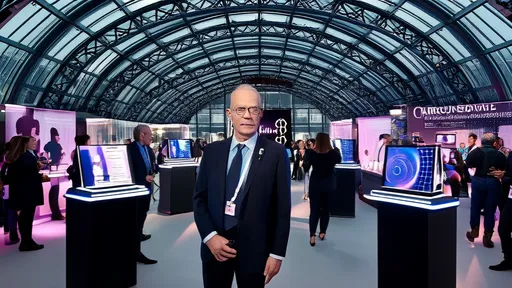
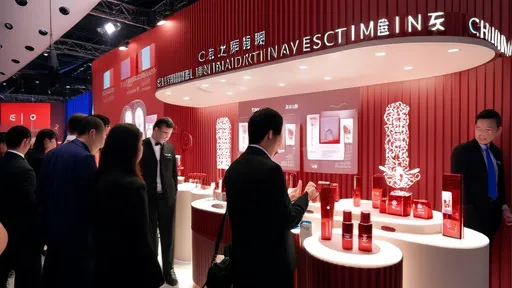
The gilded halls of Paris's Carrousel du Louvre echoed with a different kind of artistry this week as the International Cosmetic Innovation Summit (ICIS) lifted its curtain, transforming the historic venue into a global nexus for the future of beauty. The air, thick with anticipation and the subtle, sophisticated notes of experimental fragrances, signaled the commencement of what industry insiders are already calling a watershed moment for the $500 billion global industry. This is not merely another trade show; it is a declaration of a new era, a confluence where cutting-edge science, digital frontiers, and a profound rethinking of sustainability are being woven into the very fabric of what it means to be beautiful.
The atmosphere was palpably electric, a stark yet harmonious contrast to the classical masterpieces housed in the museum above. Instead of brushes and paints, the tools of creation on display were CRISPR gene-editing technologies, AI-powered skin diagnostics, and bioreactors cultivating novel ingredients. The summit has successfully positioned itself as the undisputed platform where the blueprint for the next decade of cosmetics is being drafted, attracting a veritable who's who of CEOs, lead scientists, venture capitalists, and sustainability officers from every corner of the globe.
A dominant theme resonating through the keynote speeches and panel discussions was the seismic shift from generalized solutions to hyper-personalization. The one-size-fits-all approach is being consigned to history. "We are moving beyond segments like 'for dry skin' or 'for aging'," declared Dr. Isabelle Laurent, Head of R&D at a leading Swiss skincare firm. "The future lies in products formulated for your unique skin at this specific moment, influenced by your genetics, your microbiome, your diet, and even your daily stress levels." Demonstrations of at-home devices that provide clinical-grade skin analysis, syncing seamlessly with apps that then guide the formulation of bespoke serums and creams, drew massive crowds. This is not just a product; it is an ongoing, adaptive relationship between the consumer and their skincare regimen.
Walking through the exhibition floor, one could not escape the powerful presence of biotechnology. Lab-grown alternatives are no longer a niche concept but a central pillar of innovation. Companies are showcasing bio-identical compounds, cultivated from yeast or bacteria, that are purer, more sustainable, and often more potent than their traditionally harvested counterparts. One standout was a company producing a key anti-aging molecule, previously sourced from an endangered deep-sea coral, through a proprietary fermentation process. This not only ensures an unlimited, ethical supply but also eliminates the ecological damage of harvesting. Another presented vegan squalane derived from sugarcane, offering a high-performance and renewable alternative to the shark liver-derived version. The message is clear: efficacy and ecology are now two sides of the same coin.
The digital realm asserted its influence with equal force, particularly through the lens of Augmented Reality (AR) and Artificial Intelligence. The concept of the 'phygital' beauty experience was on full display. Brands are leveraging AR for virtual try-ons that are so precise they can simulate how a foundation will look under different lighting conditions or how a specific eyeshadow will complement one's eye shape. Beyond marketing, AI is revolutionizing the R&D process itself. Machine learning algorithms are being used to analyze vast datasets of chemical compounds and their effects on human skin, predicting new synergistic formulations and drastically reducing development time from years to months. This digital acceleration is allowing brands to respond with unprecedented agility to emerging consumer trends and scientific discoveries.
Perhaps the most profound and non-negotiable undercurrent throughout the summit was the industry's intensified commitment to planetary responsibility. Sustainability has evolved from a marketing buzzword to a core operational mandate. The conversation has moved past recyclable packaging to a holistic view of the entire product lifecycle. There is a strong focus on waterless formulations, solid beauty bars, and concentrated refills that drastically reduce shipping weight and plastic waste. Furthermore, the push for full supply chain transparency is stronger than ever. Several panels were dedicated to blockchain technology's role in allowing consumers to trace the journey of every ingredient, from its origin farm to the finished product on the shelf, ensuring ethical sourcing and authenticating green claims.
In the realm of ingredients, the buzz was all about 'smart' actives and multifunctional products. The latest generation of ingredients does more than just sit on the skin; they respond to it. Enzymes that activate only in the presence of UV light, encapsulated retinol that releases gradually to minimize irritation, and peptides that signal the skin to repair itself based on specific environmental stressors were among the highlights. This intelligence is creating a new category of 'adaptive' cosmetics. Concurrently, the line between skincare and makeup continues to blur, with a surge in products like tinted serums with SPF 50, foundation with built-in anti-pollution and anti-blue light shields, and lipsticks infused with long-lasting hydrating compounds.
The inaugural day of the summit culminated in the prestigious "Innovator of the Year" awards gala, which served to crystallize the event's overarching themes. The winners were not necessarily the largest conglomerates, but the boldest pioneers: a start-up using mycelium to create compostable packaging, a biotech firm engineering proteins to repair the skin barrier at a cellular level, and a digital platform that uses AI to provide dermatologist-level skincare advice to underserved communities. These winners exemplify the new trinity of success in cosmetics: groundbreaking science, technological integration, and a genuine, actionable purpose.
As the first day drew to a close, the sentiment among attendees was one of collective momentum. The International Cosmetic Innovation Summit has unequivocally set the stage for a transformative period. The industry is being reshaped by a powerful synergy of biology and technology, all underpinned by an urgent ethical imperative. The future of beauty, as illuminated in the heart of Paris, is intelligent, personalized, sustainable, and profoundly interconnected. It is a future that promises not only to enhance how we look but to redefine our relationship with the products we use and the planet we inhabit.

By /Oct 23, 2025

By Michael Brown/Oct 23, 2025
By /Oct 23, 2025
By /Oct 23, 2025
By /Oct 23, 2025
By /Oct 23, 2025
By /Oct 23, 2025
By /Oct 23, 2025
By Samuel Cooper/Oct 23, 2025
By /Oct 23, 2025
By /Oct 23, 2025

By /Oct 23, 2025
By /Oct 23, 2025
By /Oct 23, 2025
By Daniel Scott/Oct 23, 2025
By /Oct 23, 2025
By /Oct 23, 2025

By /Oct 23, 2025
By /Oct 23, 2025
By /Oct 23, 2025