From Liangzhu to the Future: Hangzhou Biennale Outlines the Cultural Ecology under Technological Iteration"

Oct 24, 2025 By

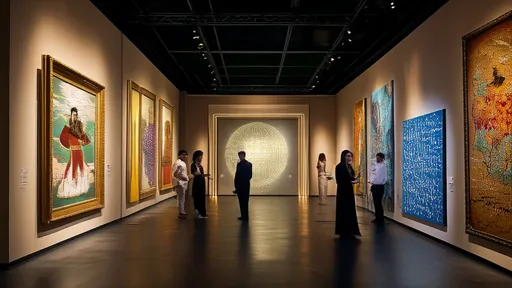
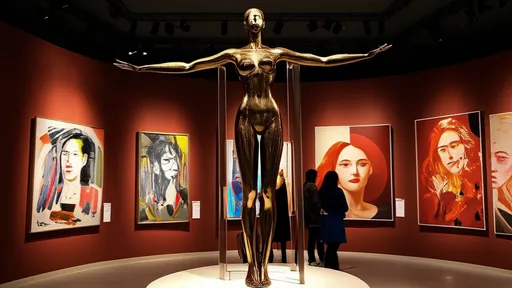
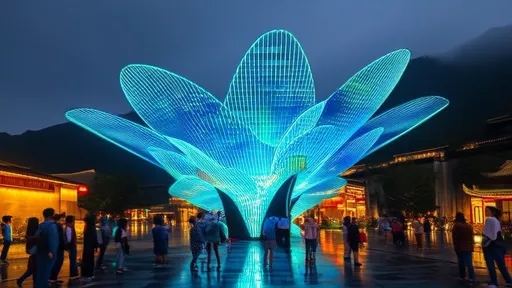
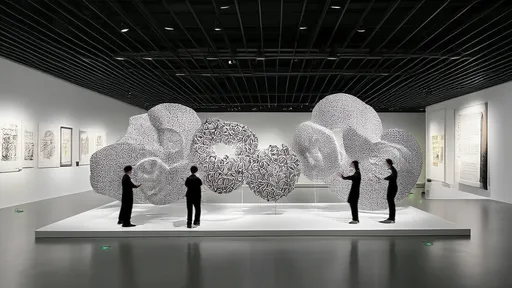
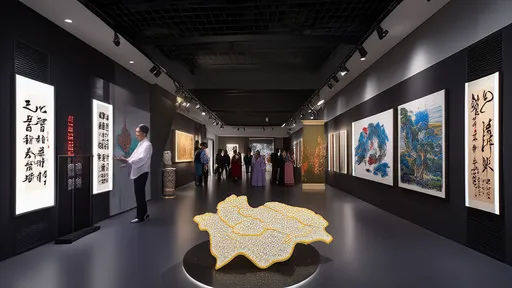
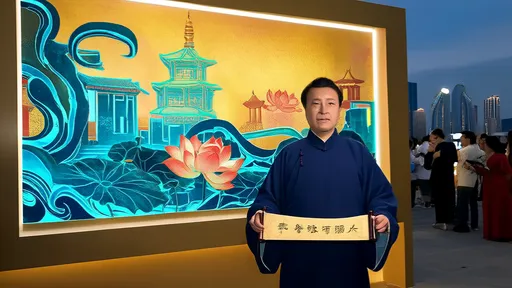
In the heart of Hangzhou, where ancient canals whisper tales of millennia past, a bold new exhibition is mapping the trajectory of human civilization through the dual lenses of archaeological heritage and technological speculation. The Hangzhou Biennale, titled "From Liangzhu to the Future," presents a compelling narrative that weaves together the intricate threads of China's earliest known state-level society with visions of tomorrow's digital ecosystems.


The exhibition opens with a dramatic juxtaposition: 5,000-year-old jade cong artifacts from the Liangzhu culture displayed alongside quantum computing interfaces. This deliberate curation immediately establishes the Biennale's central thesis—that humanity's relationship with technology represents not a radical break from tradition, but rather an evolution of fundamental cultural patterns that have shaped societies since the dawn of civilization.


Archaeological Foundations Meet Digital Frontiers

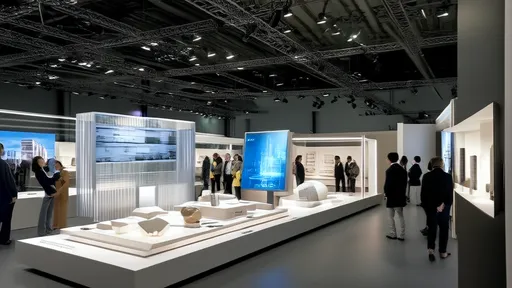
Walking through the exhibition halls, visitors encounter what initially appears to be a conventional archaeological display. Elaborate jade artifacts, sophisticated water management systems, and early urban planning models from the Liangzhu culture (3300-2300 BCE) demonstrate a society that had already mastered complex engineering and social organization. The precision of their craftsmanship, particularly in the iconic bi discs and cong tubes, reveals a cultural sophistication that challenges conventional Western-centric narratives about the development of civilization.


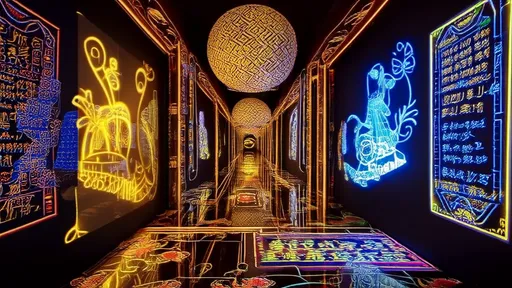
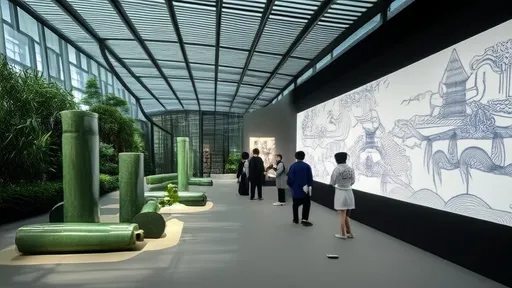
Yet as one progresses through the galleries, these ancient artifacts begin to interact with contemporary technology in unexpected ways. Projection mapping techniques animate the symbolic patterns carved into jade objects, while augmented reality applications allow visitors to virtually reconstruct the ancient Liangzhu city, complete with its sophisticated hydraulic engineering that predates similar Roman systems by centuries.


The exhibition's most provocative installations explore how digital technologies are reshaping our understanding of cultural heritage itself. Machine learning algorithms analyze patterns across thousands of Liangzhu artifacts, identifying previously unnoticed correlations between object types, burial contexts, and geographical distribution. These computational approaches are revealing new insights about social hierarchy, trade networks, and ritual practices in China's Neolithic period.


Technological Evolution as Cultural Continuum

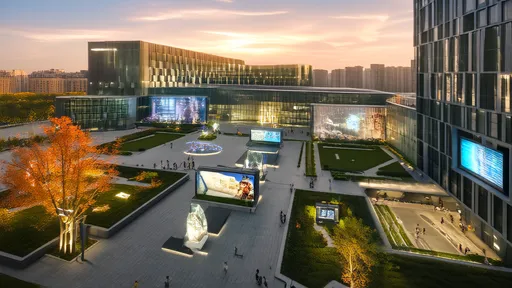
What makes the Hangzhou Biennale particularly significant is its refusal to treat technology as an external force acting upon culture. Instead, the exhibition frames technological development as an inherent aspect of cultural evolution. The water management systems of ancient Liangzhu, for instance, find their contemporary counterpart in the smart city technologies being developed in modern Hangzhou, demonstrating how the fundamental human challenge of managing resources has persisted across millennia, even as the tools have transformed.


One particularly striking installation features a real-time data visualization of Hangzhou's current urban systems—traffic flow, energy consumption, water distribution—projected alongside archaeological evidence of how the Liangzhu culture managed their settlement's infrastructure. The parallels are both startling and illuminating, suggesting that the basic principles of urban organization remain remarkably consistent despite the vast technological gulf separating these societies.


The Biennale also tackles the complex relationship between technological advancement and cultural preservation. As digital technologies enable new forms of cultural expression and documentation, they simultaneously threaten to render certain traditional practices obsolete. The exhibition doesn't shy away from these tensions, instead presenting them as part of the ongoing dialogue between innovation and tradition that has characterized human societies throughout history.


Artificial Intelligence and the Future of Cultural Production

A significant portion of the exhibition is dedicated to exploring how artificial intelligence is transforming artistic creation and cultural interpretation. Several installations feature AI systems that have been trained on databases of traditional Chinese art, from classical landscape paintings to calligraphy, and are now generating new works that both echo and subvert these traditions.


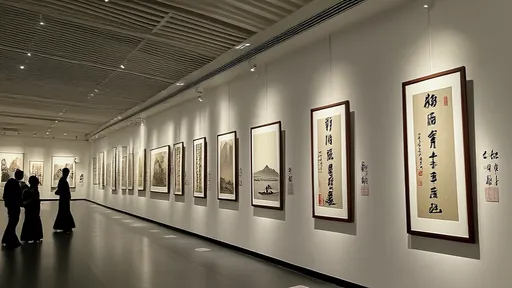
These AI-generated artworks raise profound questions about authorship, authenticity, and the very nature of cultural continuity. When an algorithm can produce calligraphy that captures the essence of Wang Xizhi's style, or landscape paintings that evoke the misty mountains of Song Dynasty masters, what does this mean for our understanding of cultural heritage? The exhibition presents these questions not as problems to be solved, but as opportunities to reconsider our relationship with both past and future.


Perhaps most ambitiously, the Biennale includes several speculative projects that imagine how emerging technologies might shape cultural practices in the coming decades. These include virtual reality reconstructions of historical sites that adapt in real-time to visitor interactions, blockchain-based systems for tracking the provenance and interpretation of cultural artifacts, and even preliminary experiments in using biotechnology to "grow" architectural structures inspired by natural forms.


The cultural implications of these technological developments extend far beyond the art world. As the exhibition demonstrates, they touch upon fundamental questions about human identity, community, and our relationship with both natural and built environments. The same machine learning techniques that can identify patterns in ancient artifacts are being used to analyze contemporary social media, revealing unexpected continuities in how humans form communities and share information across different technological contexts.


Regional Identity in a Globalized Digital Age

While the Biennale takes the Liangzhu culture as its starting point, its scope is decidedly global. The exhibition positions Hangzhou—a city that has historically served as a center of Chinese culture and innovation—as a particularly appropriate venue for considering how regional identities can be maintained and transformed in an increasingly interconnected world.


Several installations explore how digital technologies are enabling new forms of cultural exchange that bypass traditional geographic and political boundaries. At the same time, they highlight the risk of cultural homogenization as global platforms and algorithms tend to prioritize certain forms of content over others. The exhibition suggests that the challenge for the future lies in developing technological systems that can accommodate and even celebrate cultural diversity rather than erasing it.


This tension between local specificity and global connectivity emerges as one of the exhibition's central themes. Just as the Liangzhu culture developed distinctive artistic and technological practices while participating in broader regional exchange networks, contemporary societies must navigate similar dynamics in the digital realm. The Biennale presents this not as a new challenge, but as the latest iteration of a perennial human dilemma.


Beyond Technological Determinism

What ultimately distinguishes the Hangzhou Biennale from many other exhibitions about technology and culture is its rejection of technological determinism—the idea that technology develops according to its own internal logic and inevitably shapes society in predetermined ways. Instead, the exhibition emphasizes human agency and cultural context as crucial factors in determining how technologies are adopted, adapted, and ultimately integrated into social practices.


This perspective is particularly valuable at a moment when discussions about technology often veer toward either uncritical celebration or dystopian pessimism. By situating contemporary technological developments within the long arc of human cultural evolution, the Biennale provides a more nuanced framework for understanding our current moment. It suggests that while the specific tools may change, the fundamental human challenges of creating meaning, building community, and navigating change remain remarkably consistent.


The exhibition's final installations are perhaps its most provocative, presenting speculative scenarios about how emerging technologies might enable entirely new forms of cultural expression and social organization. These range from brain-computer interfaces that could allow for direct sharing of artistic experiences to decentralized autonomous organizations that might reshape how cultural institutions are funded and governed.


Yet even in its most futuristic speculations, the exhibition maintains its connection to the archaeological record. The same questions that archaeologists ask about the Liangzhu culture—How did they organize their society? What values did they express through their art and architecture? How did they adapt to environmental changes?—are presented as equally relevant to understanding our technological future.


As visitors exit the exhibition, they encounter one final installation: a real-time feed showing the ongoing archaeological work at the Liangzhu site, where new discoveries continue to reshape our understanding of this ancient culture. Alongside it runs a stream of data from various technology labs in Hangzhou and beyond, where researchers are developing the tools that will shape tomorrow's cultural landscape. The message is clear: the conversation between past and future is ongoing, and we are all participants in its unfolding.


The Hangzhou Biennale succeeds not by providing definitive answers, but by framing the right questions. In an age of rapid technological change, it offers a vital historical perspective that reminds us that while our tools evolve, the human impulses behind cultural creation remain deeply continuous. The exhibition makes a compelling case that to understand where we're going, we must first understand where we've been—and that the archaeological record has as much to teach us about our digital future as any technology forecast.


Recommend Posts
Arts

From Russia to China: The Expressive Brushwork and Oriental Spirit in Zheng Guangxu's Oil Paintings

By /Oct 24, 2025

In the hushed galleries where East meets West, a remarkable artistic dialogue unfolds through the brushstrokes of Zheng Guangxu. The exhibition From Russia to China: The Lyrical Expression and Eastern Spirit in Zheng Guangxu's Oil Paintings presents more than just a collection of artworks—it offers a profound journey across cultural landscapes, where Russian academic rigor gracefully merges with Chinese philosophical depth.
Arts

Coexistence of Nature and Art: The Practice of Local Aesthetics in the Fine Arts Section of Guilin Art Festival"

By /Oct 24, 2025

Against the limestone peaks that have inspired poets for centuries, a new artistic dialogue is unfolding in Guilin. The Guilin Art Festival, with its thematic focus "Symbiosis of Nature and Art," presents a compelling case study in how contemporary art can engage with ancient landscapes without disrupting their inherent poetry. What emerges from this year's Fine Arts Section is not merely art placed in nature, but art that breathes with the landscape, creating what curators are calling "site-specific aesthetic practice."
Arts

Polytechnic University of Milan Architectural Works Debut at Silk Road Art Exhibition"

By /Oct 24, 2025

In a groundbreaking cultural exchange that bridges Italian design excellence with ancient Chinese heritage, Politecnico di Milano has unveiled its architectural masterpieces at the Silk Road Art Exhibition for the first time. The event, hosted at the Xi'an Contemporary Art Museum, represents a significant milestone in cross-cultural dialogue between Europe and Asia, bringing Renaissance-inspired architectural philosophy to the historical terminus of the Silk Road.
Arts

Tim Yip's Gazing" Photography Series Special Presentation at Nanjing Art Expo

By Jessica Lee/Oct 24, 2025

Tim Yip's "Gaze" photography series made a remarkable appearance at the Nanjing Art Expo, marking a significant moment in the contemporary art scene. The exhibition, which ran for ten days, attracted thousands of visitors, including art critics, collectors, and enthusiasts from across the globe. Yip, renowned for his Oscar-winning work in "Crouching Tiger, Hidden Dragon," has once again captivated audiences with his profound exploration of human emotion and cultural identity through the lens of his camera. The "Gaze" series, in particular, delves into the silent dialogues between subjects and their environments, creating a hauntingly beautiful narrative that resonates deeply with viewers.
Arts

Paper Installations and Composite Media: Visual Narratives Constructed in Chinese Paper-based Art Exhibitions

By Emma Thompson/Oct 24, 2025

In the hushed galleries of the National Art Museum, a quiet revolution unfolds. The exhibition Paper Apparatus and Composite Media: The Visual Narrative of Chinese Paper-Based Art presents not merely artworks, but entire ecosystems of meaning, where the humble sheet of paper transforms into a dynamic protagonist in contemporary artistic discourse. This is not the paper of ancient scrolls or delicate calligraphy alone; this is paper as architecture, as memory, as a living, breathing entity in dialogue with the digital age and material history.
Arts

Artworks from 79 Countries Gather in Xi'an, Today's Silk Road Art Exhibition Promotes Inter-Civilizational Dialogue"

By /Oct 24, 2025

The ancient city of Xi'an, once the eastern terminus of the legendary Silk Road, is once again playing host to a grand convergence of cultures and artistic traditions. The "Today's Silk Road" International Art Exhibition has opened its doors, bringing together an unprecedented collection of 79 nations in a vibrant tapestry of visual dialogue that spans continents and centuries. Against the backdrop of Xi'an's historic city walls and modern galleries, this exhibition represents more than just a display of artistic mastery—it serves as a living bridge between civilizations, echoing the spirit of exchange that once defined the ancient trade routes.
Arts

Industry-Academia-Research-Exhibition-Creation: Nanjing Visual Arts College Builds a New Platform for Art Ecology"

By James Moore/Oct 24, 2025

In the heart of China's cultural landscape, Nanjing University of the Arts is pioneering an innovative educational model that seamlessly integrates industry, academia, research, exhibition, and creation into a cohesive ecosystem. This groundbreaking approach represents a significant departure from traditional art education, positioning the institution at the forefront of artistic innovation and cultural development.
Arts

Empowerment of Art through Technology: Digital Integration Exploration of Today's Silk Road Art Exhibition"

By /Oct 24, 2025

In the heart of Beijing's National Art Museum, a revolution is quietly unfolding. The exhibition titled "Technology Empowering Art: Digital Integration Exploration of the Silk Road Art Exhibition Today" represents more than just another cultural event—it marks a pivotal moment where ancient heritage and cutting-edge innovation converge to redefine how we experience art. Curated by the Ministry of Culture and Tourism in collaboration with leading tech institutions, this groundbreaking showcase demonstrates how digital tools can breathe new life into historical narratives while preserving their authenticity.
Arts

Chinese Paper Art Embarks on Global Tour: A Cultural Renaissance Unfolds

By /Oct 24, 2025

The world is about to witness an unprecedented cultural phenomenon as China launches its most ambitious international exhibition of paper-based art. Titled "The Eternal Scroll: Chinese Paper Art Through the Ages," this groundbreaking initiative represents a strategic effort to showcase the diversity and sophistication of China's paper media art through clustered global dissemination. For centuries, paper has served as more than mere material in Chinese culture—it has been the canvas for philosophical expression, the medium for spiritual contemplation, and the vehicle for artistic innovation. Now, this humble yet profound material prepares to tell its story on the world stage through what curators are calling "the most comprehensive presentation of Chinese paper art ever assembled for international audiences."
Arts

The Rise of Female Power: Nanjing Art Expo's Themed Exhibition Showcases New Perspectives in Contemporary Art

By /Oct 24, 2025

Amidst the historic walls of Nanjing, where ancient dynasties once flourished, a contemporary revolution is unfolding. The Nanjing Art Fair has launched its most ambitious thematic exhibition to date, titled "The Rise of Female Power: New Perspectives in Contemporary Art," challenging traditional narratives and celebrating the formidable creative energy of women artists. This groundbreaking showcase, occupying the entire west wing of the convention center, represents more than just an art exhibition; it stands as a cultural manifesto for our times.
Arts

Cross-Boundary Creation and Public Experience: ART Nanjing Breaks the Boundaries of Art

By /Oct 24, 2025

In the heart of China's ancient capital, a quiet revolution is unfolding across the art scene. ART Nanjing, an ambitious city-wide initiative, is systematically dismantling the traditional barriers that have long separated artistic disciplines while simultaneously bridging the gap between creators and their audiences. What began as scattered experimental projects has coalesced into a movement that is fundamentally reshaping how art is created, experienced, and understood in contemporary China.
Arts

From Print Media to Clusters: The Internationalization Path of Chinese Paper-based Art

By /Oct 24, 2025

In the quiet corners of Beijing's 798 Art District, a subtle revolution is unfolding. While digital screens dominate global communication, Chinese paper-based art is experiencing an unprecedented international renaissance. The journey from traditional paper media to clustered global networks represents one of the most fascinating cultural transformations of our time.
Arts

Musical 'Lion Boy' Closes Guilin Art Festival with the Spirit of Lion Dance Culture"

By /Oct 24, 2025

The curtains fell on the Guilin Arts Festival with a thunderous standing ovation as the final notes of the musical The Lion Awakens echoed through the auditorium. This wasn't just the conclusion of a performance; it was a powerful cultural statement, a vibrant fusion of contemporary stagecraft and ancient tradition that left an indelible mark on the international audience. The production, which served as the festival's grand finale, successfully positioned the age-old art of lion dancing, or Awakening Lion culture, not as a museum relic, but as a living, breathing, and profoundly relevant art form for the modern stage.
Arts

Silk Road Emotion, Beauty Together: Today's Silk Road International Art Invitational Exhibition"

By Sarah Davis/Oct 24, 2025

Silk Road Affection, Shared Beauty: The International Art Invitation Exhibition of the Silk Road Today opened its grand doors to the public last Friday at the National Art Museum, marking a significant milestone in cross-cultural artistic dialogue. The exhibition, which brings together over 200 artworks from 35 countries along the historic Silk Road routes, has already attracted thousands of visitors in its first week, with art critics praising its innovative approach to bridging ancient traditions with contemporary expressions.
Arts

Jinan's Cultural and Tourism Promotion through Art: The City's Strategy Behind the Macau Biennale"

By /Oct 24, 2025

The golden autumn breeze carries more than just the crisp scent of fallen leaves through the ancient streets of Jinan; it brings with it the whispers of an artistic renaissance that recently captivated international audiences at the Macao International Art Biennale. For the first time in its cultural exchange history, Jinan presented a curated collection of contemporary artworks that seamlessly wove the city's profound heritage with avant-garde creative expressions, marking a significant milestone in its global cultural outreach.
Arts

Ink Mist on Xuan Paper: How Dutch Audiences Interpret Chinese Contemporary Paper Art"

By /Oct 24, 2025

In the heart of Amsterdam, an exhibition titled "Beyond the Silk: Contemporary Chinese Paper Art" has quietly ignited a cultural conversation that transcends geographical boundaries. The dimly lit gallery space, with its carefully curated displays of xuan paper artworks, has become an unexpected bridge between Eastern artistic traditions and Western interpretive frameworks. Dutch visitors, known for their directness and pragmatic worldview, find themselves navigating the subtle nuances of ink washes and paper textures that have defined Chinese aesthetic sensibilities for centuries.
Arts

From Liangzhu to the Future: Hangzhou Biennale Outlines the Cultural Ecology under Technological Iteration"

By /Oct 24, 2025

In the heart of Hangzhou, where ancient canals whisper tales of millennia past, a bold new exhibition is mapping the trajectory of human civilization through the dual lenses of archaeological heritage and technological speculation. The Hangzhou Biennale, titled "From Liangzhu to the Future," presents a compelling narrative that weaves together the intricate threads of China's earliest known state-level society with visions of tomorrow's digital ecosystems.
Arts

The 40th Anniversary Special Exhibition of Huang Gesheng's 'Li River Hundred Miles' at Guilin Art Festival"

By /Oct 24, 2025

Under the soft glow of gallery lights that mimic the morning mist over karst mountains, visitors to the Guilin Art Festival are experiencing more than an exhibition—they are walking through a living chapter of Chinese art history. The 40th-anniversary special exhibition of Huang Gesheng's monumental masterpiece, "The Hundred-Mile Li River Scroll," has become the centerpiece of the festival, drawing crowds into a panoramic journey that transcends time and space.
Arts

Ecological Concern and Memory Reconstruction: The Rich Possibilities of Contemporary Paper Art in the Realm of Conceptual Dimensions

By /Oct 24, 2025

In the quiet corners of contemporary art galleries, a subtle revolution is unfolding. Paper, that most humble and ancient of materials, is undergoing a profound transformation, emerging as a powerful medium for exploring ecological consciousness and memory. The exhibition Ecological Care and Memory Reconstruction: The Rich Conceptual Possibilities of Contemporary Paper Art presents a compelling narrative that transcends traditional craft, positioning paper art at the forefront of conceptual discourse.
Arts

From Lijiang Hundred Miles" to "Magpie and Flower Autumn Colors": The Re-creation of Traditional Landscape Painting in Contemporary Times

By /Oct 24, 2025

In the hushed galleries where classical Chinese landscape paintings whisper tales of mist-shrouded mountains and meandering rivers, a quiet revolution is unfolding. The journey from One Hundred Li of the Li River to Autumn Colors on the Qiao and Hua Mountains represents more than mere geographical transition—it embodies the evolving soul of Chinese landscape art as contemporary artists reinterpret centuries-old traditions through modern sensibilities.