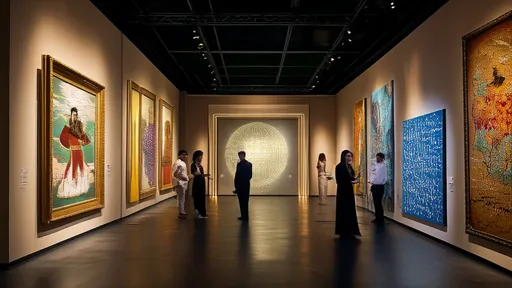
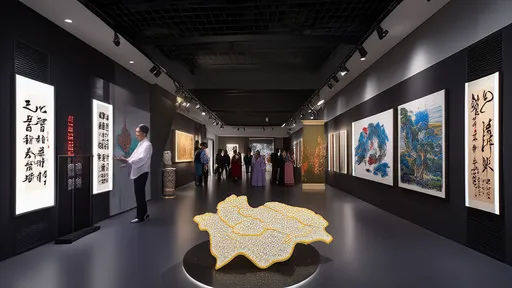
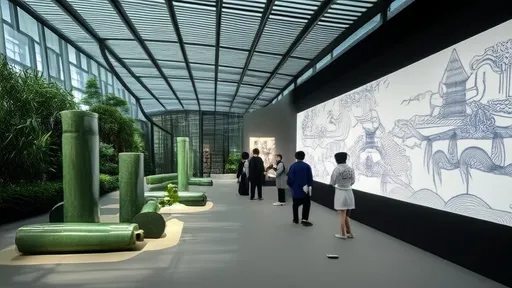
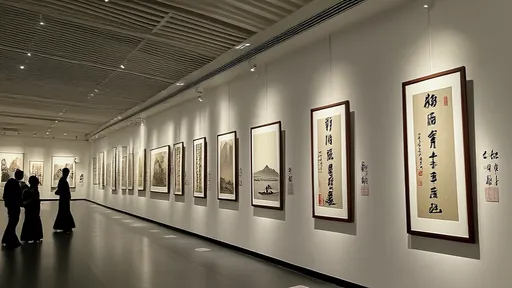
In the heart of Amsterdam, an exhibition titled "Beyond the Silk: Contemporary Chinese Paper Art" has quietly ignited a cultural conversation that transcends geographical boundaries. The dimly lit gallery space, with its carefully curated displays of xuan paper artworks, has become an unexpected bridge between Eastern artistic traditions and Western interpretive frameworks. Dutch visitors, known for their directness and pragmatic worldview, find themselves navigating the subtle nuances of ink washes and paper textures that have defined Chinese aesthetic sensibilities for centuries.
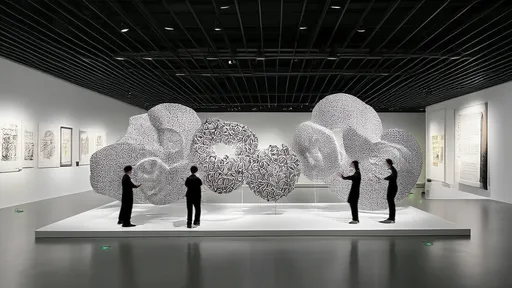
The exhibition's centerpiece, a monumental installation by artist Zhang Wei titled "Whispering Mountains," captures the essence of this cross-cultural encounter. Created using traditional xuan paper techniques but employing contemporary abstract forms, the work presents Dutch viewers with a visual language that simultaneously feels familiar and profoundly foreign. The delicate balance between preservation and innovation in these artworks challenges conventional Western perceptions of Chinese art as merely traditional or decorative.
Cultural mediator Eva van der Berg, who has been observing visitor reactions since the exhibition's opening, notes an interesting pattern in how Dutch audiences approach these works. "Unlike Chinese viewers who might immediately recognize the cultural references and technical mastery," she explains, "Dutch visitors tend to engage with the artworks through their own cultural lens. They appreciate the tactile quality of the paper, the environmental sustainability of the materials, and the conceptual depth behind each piece." This observation highlights how cultural background shapes aesthetic appreciation in fundamental ways.
Professor Martijn de Vries of Leiden University, specializing in cross-cultural art reception, suggests that the Dutch interpretation of these paper artworks reflects broader societal values. "The Netherlands has a long history of water management and paper production," he notes. "When Dutch viewers see how Chinese artists manipulate water and paper to create these ethereal effects, they're not just seeing art—they're seeing a dialogue between material and maker that resonates with their own cultural heritage." This connection, though arising from different historical contexts, creates an unexpected common ground for appreciation.
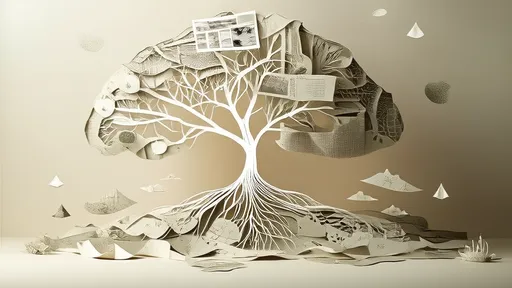
What makes this exhibition particularly significant is how it demonstrates the evolving nature of cultural exchange. Rather than presenting Chinese paper art as static tradition, the showcased works reveal how contemporary Chinese artists are reinterpreting their heritage through global perspectives. Artist Li Ming's "Floating Memories" series, for instance, uses xuan paper to create three-dimensional forms that resemble both classical Chinese landscape elements and modern architectural structures. This duality allows Dutch viewers to find points of reference while still engaging with distinctly Chinese artistic concepts.
The educational component of the exhibition has proven crucial in facilitating deeper understanding. Workshops on paper-making techniques and demonstrations of ink painting have given Dutch audiences hands-on experience with the materials and processes central to these artworks. This tactile engagement has transformed abstract appreciation into concrete understanding, with many visitors expressing newfound respect for the technical skill required in traditional Chinese paper arts.
Interestingly, the exhibition has also revealed generational differences in how Dutch viewers interpret these works. Older visitors often approach the artworks with more historical curiosity, seeking to understand the cultural context and technical traditions. Younger audiences, particularly those familiar with contemporary art scenes, tend to focus more on conceptual aspects and environmental messages. This generational split reflects broader trends in how global audiences engage with non-Western art forms in the 21st century.
Gallery director Anouk van Dijk emphasizes the importance of such exhibitions in today's increasingly interconnected art world. "We're moving beyond the era where non-Western art was viewed primarily through an ethnographic or exoticizing lens," she states. "What we're seeing here is Dutch audiences engaging with Chinese contemporary art as contemporary art—not as ethnic artifact or cultural curiosity. This represents significant progress in global art appreciation."
The success of this exhibition points to larger shifts in how cultural products circulate and are received in our globalized world. As boundaries between artistic traditions become more porous, viewers bring their multiple perspectives to bear on works from different cultural contexts. The Dutch interpretation of Chinese paper art, with its emphasis on materiality, process, and conceptual framework, adds new dimensions to understanding these works—dimensions that might not be immediately apparent within their original cultural context.
Looking forward, the conversations sparked by this exhibition suggest promising directions for future cultural exchanges. The nuanced ways in which Dutch viewers have engaged with these works demonstrate that meaningful cross-cultural dialogue requires neither complete assimilation nor maintained distance. Rather, it thrives in the space between understanding and mystery, where viewers can recognize shared human concerns while respecting cultural differences.
As the exhibition prepares to travel to Rotterdam and then to other European cities, its organizers are considering how to document and build upon these interpretive patterns. The insights gained from Dutch audiences could inform how Chinese contemporary art is presented in other cultural contexts, potentially leading to more nuanced and effective cultural diplomacy through the arts.
Ultimately, the story of how Dutch viewers interpret Chinese contemporary paper art is about more than just art appreciation—it's about how we find meaning across cultural divides. In an age often characterized by cultural conflict and misunderstanding, the quiet contemplation of ink on paper offers a powerful reminder of our shared capacity for wonder and our ability to find connection in the most unexpected places.
By /Oct 24, 2025
By /Oct 24, 2025
By /Oct 24, 2025
By Jessica Lee/Oct 24, 2025
By Emma Thompson/Oct 24, 2025
By /Oct 24, 2025
By James Moore/Oct 24, 2025
By /Oct 24, 2025
By /Oct 24, 2025
By /Oct 24, 2025
By /Oct 24, 2025
By /Oct 24, 2025
By /Oct 24, 2025
By Sarah Davis/Oct 24, 2025
By /Oct 24, 2025

By /Oct 24, 2025
By /Oct 24, 2025
By /Oct 24, 2025
By /Oct 24, 2025
By /Oct 24, 2025