From Print Media to Clusters: The Internationalization Path of Chinese Paper-based Art

Oct 24, 2025 By

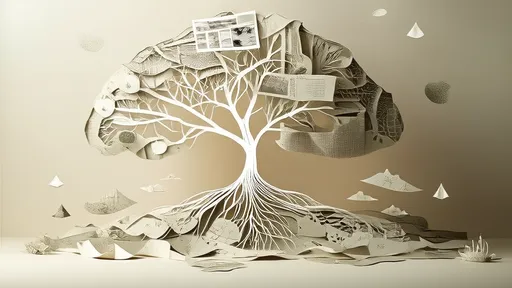
In the quiet corners of Beijing's 798 Art District, a subtle revolution is unfolding. While digital screens dominate global communication, Chinese paper-based art is experiencing an unprecedented international renaissance. The journey from traditional paper media to clustered global networks represents one of the most fascinating cultural transformations of our time.


The story begins with what cultural historians call the "paper memory" of Chinese civilization. For centuries, paper served not merely as a medium but as a cultural DNA carrier. The tactile relationship between Chinese artists and paper differs fundamentally from Western traditions. Where Western artists often treat paper as a surface to be filled, Chinese creators engage with paper as a living entity—its texture, absorbency, and resilience become active participants in the artistic dialogue.


Traditional paper arts were once considered fragile artifacts destined for museum vitrines. The conventional wisdom held that xuan paper, rice paper, and other traditional mediums couldn't survive the journey across cultural boundaries. Yet something remarkable has occurred in the past decade. Rather than diminishing in the digital age, paper art has discovered new relevance precisely because of its material authenticity in an increasingly virtual world.


The transformation began with what I've termed the "mediation moment." Around 2015, Chinese paper artists started collaborating with international curators in ways that fundamentally recontextualized their work. Instead of presenting paper art as exotic artifacts, these collaborations positioned them as contemporary responses to global issues—environmental concerns, the crisis of materiality, and the search for authentic human connection in digital spaces.


What makes the current movement distinctive is its networked character. Earlier attempts at internationalizing Chinese paper art followed what scholars call the "lone masterpiece" model—individual works traveling to foreign exhibitions. The contemporary approach operates through what I call "creative clusters"—interconnected networks of artists, galleries, academic institutions, and digital platforms that move together through the global art ecosystem.


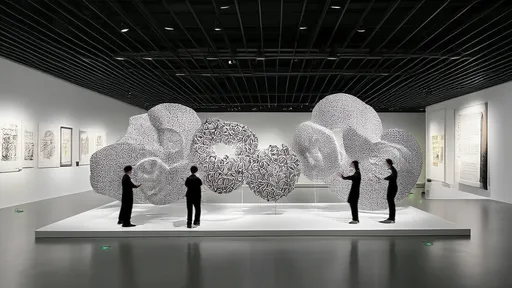
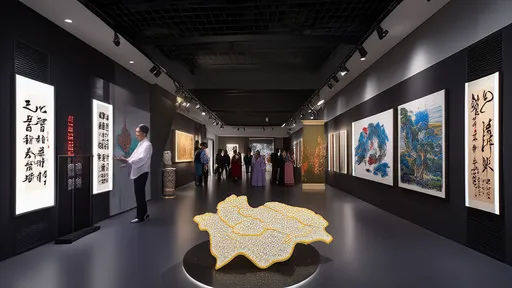
These clusters function as cultural ecosystems rather than mere exhibition circuits. When the "Breathing Paper" exhibition traveled from Shanghai to London then to New York, it wasn't just artworks crossing borders. The entire creative environment traveled with it—master paper makers conducting workshops, scholars presenting research, and even the specific humidity-controlled environments necessary for preserving delicate works. This holistic approach has revolutionized how paper art communicates across cultures.


The digital layer has become crucial to this clustered approach. While this might seem paradoxical for paper-based art, the relationship is more complementary than contradictory. Social media platforms, virtual exhibitions, and digital archives don't replace the physical experience of paper art—they amplify its reach and create what one curator called "digital longing" for the tactile original. Instagram posts of intricate paper cuttings generate interest that drives physical attendance at exhibitions halfway across the world.


International collectors have developed what gallery owners describe as "paper literacy." A decade ago, Western collectors often approached Chinese paper works with uncertainty about preservation and valuation. Today, through cluster education programs and transnational dialogue, collectors have developed sophisticated understanding of different paper types, conservation techniques, and cultural contexts. This educated collector base has created sustainable market conditions that support artists' international careers.


The academic world has played an unexpected role in this transformation. University art departments from London to Sydney have established dedicated Chinese paper art research centers. These aren't merely study facilities—they function as network nodes that connect artists, theorists, and practitioners across continents. The academic validation has provided intellectual framework that helps international audiences understand paper art beyond superficial exoticism.


Perhaps the most fascinating development has been the emergence of what artists call "paper diplomacy." In an era of geopolitical tensions, paper art has become a subtle medium for cultural exchange that operates beneath political radar. The material itself—fragile yet enduring, local yet universal—becomes metaphor for the kind of connections possible between cultures. Several major international paper art collaborations have proceeded even during periods of diplomatic frost between governments.


The environmental dimension has added another layer of relevance. Contemporary Chinese paper artists have increasingly engaged with ecological themes, using traditional techniques to comment on modern environmental challenges. This thematic convergence has created natural bridges to international audiences concerned with sustainability and material ethics. The very process of making paper—from plant to finished product—becomes part of the artistic narrative.


Looking at specific success stories reveals the mechanism of this clustered approach. Artist Liu Jianhua's paper installations, for instance, achieved international recognition not through isolated exhibitions but through a carefully orchestrated network strategy. His work appeared simultaneously in museum exhibitions, academic publications, environmental conferences, and digital platforms—each context reinforcing the others. This multidimensional presence created what market analysts call "cultural critical mass."


The infrastructure supporting this internationalization has evolved dramatically. Specialized shipping companies now offer climate-controlled transport specifically for paper artworks. International insurance markets have developed sophisticated valuation models. Translation services specializing in art terminology ensure that conceptual nuances survive linguistic transitions. This supporting ecosystem, while invisible to most viewers, forms the backbone of successful cross-cultural transmission.


Younger generation artists are pushing the boundaries even further. Where their teachers might have hesitated to modify traditional techniques, contemporary creators freely experiment while maintaining philosophical connections to paper's cultural heritage. We're seeing paper combined with light installations, soundscapes, and even augmented reality—all while preserving the essential material dialogue that defines the tradition.


The market evolution has been equally remarkable. Auction houses that once relegated paper works to minor categories now stage dedicated paper art sales. Pricing structures have matured, reflecting not just aesthetic value but historical significance, technical innovation, and conservation status. This market sophistication provides economic sustainability that enables artists to pursue ambitious international projects.


Critical reception has shifted accordingly. International art critics who might previously have focused on exotic elements now engage with paper art through multiple theoretical frameworks—material culture studies, environmental philosophy, post-digital theory. This intellectual engagement elevates the conversation beyond cultural tourism to genuine cross-cultural dialogue.


The COVID-19 pandemic unexpectedly accelerated certain aspects of this internationalization. While physical exhibitions paused, digital clusters flourished. Online workshops connected master paper artists with international students in ways that would have been logistically impossible before. Virtual reality exhibitions allowed viewers to examine paper textures with digital magnification that revealed details invisible to the naked eye. These digital adaptations have become permanent features of the international paper art landscape.


As we look to the future, the trajectory suggests even deeper integration. We're seeing the emergence of what might be called "transcultural paper"—works that draw from multiple paper traditions while maintaining distinctive Chinese characteristics. This isn't cultural dilution but rather enrichment through dialogue. The clusters are expanding to include paper artists from Japan, Korea, Europe, and the Americas, creating truly global conversations about this most ancient of mediums.


The journey from isolated paper media to interconnected clusters represents more than just an art world trend. It demonstrates how traditional cultural forms can achieve global relevance without sacrificing their essential character. The success of Chinese paper art internationally offers a model for other cultural traditions seeking meaningful global engagement in the digital age.


In the final analysis, the internationalization of Chinese paper art succeeds precisely because it honors paper's materiality while embracing contemporary networks. The delicate balance between tradition and innovation, between local character and global language, creates the conditions for genuine cross-cultural communication. As one veteran artist told me, "Paper remembers—but it also imagines." This capacity for both memory and imagination explains why paper, against all predictions of its demise, has become a vibrant medium for international dialogue.


Recommend Posts
Arts

From Russia to China: The Expressive Brushwork and Oriental Spirit in Zheng Guangxu's Oil Paintings

By /Oct 24, 2025

In the hushed galleries where East meets West, a remarkable artistic dialogue unfolds through the brushstrokes of Zheng Guangxu. The exhibition From Russia to China: The Lyrical Expression and Eastern Spirit in Zheng Guangxu's Oil Paintings presents more than just a collection of artworks—it offers a profound journey across cultural landscapes, where Russian academic rigor gracefully merges with Chinese philosophical depth.
Arts

Coexistence of Nature and Art: The Practice of Local Aesthetics in the Fine Arts Section of Guilin Art Festival"

By /Oct 24, 2025

Against the limestone peaks that have inspired poets for centuries, a new artistic dialogue is unfolding in Guilin. The Guilin Art Festival, with its thematic focus "Symbiosis of Nature and Art," presents a compelling case study in how contemporary art can engage with ancient landscapes without disrupting their inherent poetry. What emerges from this year's Fine Arts Section is not merely art placed in nature, but art that breathes with the landscape, creating what curators are calling "site-specific aesthetic practice."
Arts

Polytechnic University of Milan Architectural Works Debut at Silk Road Art Exhibition"

By /Oct 24, 2025

In a groundbreaking cultural exchange that bridges Italian design excellence with ancient Chinese heritage, Politecnico di Milano has unveiled its architectural masterpieces at the Silk Road Art Exhibition for the first time. The event, hosted at the Xi'an Contemporary Art Museum, represents a significant milestone in cross-cultural dialogue between Europe and Asia, bringing Renaissance-inspired architectural philosophy to the historical terminus of the Silk Road.
Arts

Tim Yip's Gazing" Photography Series Special Presentation at Nanjing Art Expo

By Jessica Lee/Oct 24, 2025

Tim Yip's "Gaze" photography series made a remarkable appearance at the Nanjing Art Expo, marking a significant moment in the contemporary art scene. The exhibition, which ran for ten days, attracted thousands of visitors, including art critics, collectors, and enthusiasts from across the globe. Yip, renowned for his Oscar-winning work in "Crouching Tiger, Hidden Dragon," has once again captivated audiences with his profound exploration of human emotion and cultural identity through the lens of his camera. The "Gaze" series, in particular, delves into the silent dialogues between subjects and their environments, creating a hauntingly beautiful narrative that resonates deeply with viewers.
Arts

Paper Installations and Composite Media: Visual Narratives Constructed in Chinese Paper-based Art Exhibitions

By Emma Thompson/Oct 24, 2025

In the hushed galleries of the National Art Museum, a quiet revolution unfolds. The exhibition Paper Apparatus and Composite Media: The Visual Narrative of Chinese Paper-Based Art presents not merely artworks, but entire ecosystems of meaning, where the humble sheet of paper transforms into a dynamic protagonist in contemporary artistic discourse. This is not the paper of ancient scrolls or delicate calligraphy alone; this is paper as architecture, as memory, as a living, breathing entity in dialogue with the digital age and material history.
Arts

Artworks from 79 Countries Gather in Xi'an, Today's Silk Road Art Exhibition Promotes Inter-Civilizational Dialogue"

By /Oct 24, 2025

The ancient city of Xi'an, once the eastern terminus of the legendary Silk Road, is once again playing host to a grand convergence of cultures and artistic traditions. The "Today's Silk Road" International Art Exhibition has opened its doors, bringing together an unprecedented collection of 79 nations in a vibrant tapestry of visual dialogue that spans continents and centuries. Against the backdrop of Xi'an's historic city walls and modern galleries, this exhibition represents more than just a display of artistic mastery—it serves as a living bridge between civilizations, echoing the spirit of exchange that once defined the ancient trade routes.
Arts

Industry-Academia-Research-Exhibition-Creation: Nanjing Visual Arts College Builds a New Platform for Art Ecology"

By James Moore/Oct 24, 2025

In the heart of China's cultural landscape, Nanjing University of the Arts is pioneering an innovative educational model that seamlessly integrates industry, academia, research, exhibition, and creation into a cohesive ecosystem. This groundbreaking approach represents a significant departure from traditional art education, positioning the institution at the forefront of artistic innovation and cultural development.
Arts

Empowerment of Art through Technology: Digital Integration Exploration of Today's Silk Road Art Exhibition"

By /Oct 24, 2025

In the heart of Beijing's National Art Museum, a revolution is quietly unfolding. The exhibition titled "Technology Empowering Art: Digital Integration Exploration of the Silk Road Art Exhibition Today" represents more than just another cultural event—it marks a pivotal moment where ancient heritage and cutting-edge innovation converge to redefine how we experience art. Curated by the Ministry of Culture and Tourism in collaboration with leading tech institutions, this groundbreaking showcase demonstrates how digital tools can breathe new life into historical narratives while preserving their authenticity.
Arts

Chinese Paper Art Embarks on Global Tour: A Cultural Renaissance Unfolds

By /Oct 24, 2025

The world is about to witness an unprecedented cultural phenomenon as China launches its most ambitious international exhibition of paper-based art. Titled "The Eternal Scroll: Chinese Paper Art Through the Ages," this groundbreaking initiative represents a strategic effort to showcase the diversity and sophistication of China's paper media art through clustered global dissemination. For centuries, paper has served as more than mere material in Chinese culture—it has been the canvas for philosophical expression, the medium for spiritual contemplation, and the vehicle for artistic innovation. Now, this humble yet profound material prepares to tell its story on the world stage through what curators are calling "the most comprehensive presentation of Chinese paper art ever assembled for international audiences."
Arts

The Rise of Female Power: Nanjing Art Expo's Themed Exhibition Showcases New Perspectives in Contemporary Art

By /Oct 24, 2025

Amidst the historic walls of Nanjing, where ancient dynasties once flourished, a contemporary revolution is unfolding. The Nanjing Art Fair has launched its most ambitious thematic exhibition to date, titled "The Rise of Female Power: New Perspectives in Contemporary Art," challenging traditional narratives and celebrating the formidable creative energy of women artists. This groundbreaking showcase, occupying the entire west wing of the convention center, represents more than just an art exhibition; it stands as a cultural manifesto for our times.
Arts

Cross-Boundary Creation and Public Experience: ART Nanjing Breaks the Boundaries of Art

By /Oct 24, 2025

In the heart of China's ancient capital, a quiet revolution is unfolding across the art scene. ART Nanjing, an ambitious city-wide initiative, is systematically dismantling the traditional barriers that have long separated artistic disciplines while simultaneously bridging the gap between creators and their audiences. What began as scattered experimental projects has coalesced into a movement that is fundamentally reshaping how art is created, experienced, and understood in contemporary China.
Arts

From Print Media to Clusters: The Internationalization Path of Chinese Paper-based Art

By /Oct 24, 2025

In the quiet corners of Beijing's 798 Art District, a subtle revolution is unfolding. While digital screens dominate global communication, Chinese paper-based art is experiencing an unprecedented international renaissance. The journey from traditional paper media to clustered global networks represents one of the most fascinating cultural transformations of our time.
Arts

Musical 'Lion Boy' Closes Guilin Art Festival with the Spirit of Lion Dance Culture"

By /Oct 24, 2025

The curtains fell on the Guilin Arts Festival with a thunderous standing ovation as the final notes of the musical The Lion Awakens echoed through the auditorium. This wasn't just the conclusion of a performance; it was a powerful cultural statement, a vibrant fusion of contemporary stagecraft and ancient tradition that left an indelible mark on the international audience. The production, which served as the festival's grand finale, successfully positioned the age-old art of lion dancing, or Awakening Lion culture, not as a museum relic, but as a living, breathing, and profoundly relevant art form for the modern stage.
Arts

Silk Road Emotion, Beauty Together: Today's Silk Road International Art Invitational Exhibition"

By Sarah Davis/Oct 24, 2025

Silk Road Affection, Shared Beauty: The International Art Invitation Exhibition of the Silk Road Today opened its grand doors to the public last Friday at the National Art Museum, marking a significant milestone in cross-cultural artistic dialogue. The exhibition, which brings together over 200 artworks from 35 countries along the historic Silk Road routes, has already attracted thousands of visitors in its first week, with art critics praising its innovative approach to bridging ancient traditions with contemporary expressions.
Arts

Jinan's Cultural and Tourism Promotion through Art: The City's Strategy Behind the Macau Biennale"

By /Oct 24, 2025

The golden autumn breeze carries more than just the crisp scent of fallen leaves through the ancient streets of Jinan; it brings with it the whispers of an artistic renaissance that recently captivated international audiences at the Macao International Art Biennale. For the first time in its cultural exchange history, Jinan presented a curated collection of contemporary artworks that seamlessly wove the city's profound heritage with avant-garde creative expressions, marking a significant milestone in its global cultural outreach.
Arts

Ink Mist on Xuan Paper: How Dutch Audiences Interpret Chinese Contemporary Paper Art"

By /Oct 24, 2025

In the heart of Amsterdam, an exhibition titled "Beyond the Silk: Contemporary Chinese Paper Art" has quietly ignited a cultural conversation that transcends geographical boundaries. The dimly lit gallery space, with its carefully curated displays of xuan paper artworks, has become an unexpected bridge between Eastern artistic traditions and Western interpretive frameworks. Dutch visitors, known for their directness and pragmatic worldview, find themselves navigating the subtle nuances of ink washes and paper textures that have defined Chinese aesthetic sensibilities for centuries.
Arts

From Liangzhu to the Future: Hangzhou Biennale Outlines the Cultural Ecology under Technological Iteration"

By /Oct 24, 2025

In the heart of Hangzhou, where ancient canals whisper tales of millennia past, a bold new exhibition is mapping the trajectory of human civilization through the dual lenses of archaeological heritage and technological speculation. The Hangzhou Biennale, titled "From Liangzhu to the Future," presents a compelling narrative that weaves together the intricate threads of China's earliest known state-level society with visions of tomorrow's digital ecosystems.
Arts

The 40th Anniversary Special Exhibition of Huang Gesheng's 'Li River Hundred Miles' at Guilin Art Festival"

By /Oct 24, 2025

Under the soft glow of gallery lights that mimic the morning mist over karst mountains, visitors to the Guilin Art Festival are experiencing more than an exhibition—they are walking through a living chapter of Chinese art history. The 40th-anniversary special exhibition of Huang Gesheng's monumental masterpiece, "The Hundred-Mile Li River Scroll," has become the centerpiece of the festival, drawing crowds into a panoramic journey that transcends time and space.
Arts

Ecological Concern and Memory Reconstruction: The Rich Possibilities of Contemporary Paper Art in the Realm of Conceptual Dimensions

By /Oct 24, 2025

In the quiet corners of contemporary art galleries, a subtle revolution is unfolding. Paper, that most humble and ancient of materials, is undergoing a profound transformation, emerging as a powerful medium for exploring ecological consciousness and memory. The exhibition Ecological Care and Memory Reconstruction: The Rich Conceptual Possibilities of Contemporary Paper Art presents a compelling narrative that transcends traditional craft, positioning paper art at the forefront of conceptual discourse.
Arts

From Lijiang Hundred Miles" to "Magpie and Flower Autumn Colors": The Re-creation of Traditional Landscape Painting in Contemporary Times

By /Oct 24, 2025

In the hushed galleries where classical Chinese landscape paintings whisper tales of mist-shrouded mountains and meandering rivers, a quiet revolution is unfolding. The journey from One Hundred Li of the Li River to Autumn Colors on the Qiao and Hua Mountains represents more than mere geographical transition—it embodies the evolving soul of Chinese landscape art as contemporary artists reinterpret centuries-old traditions through modern sensibilities.