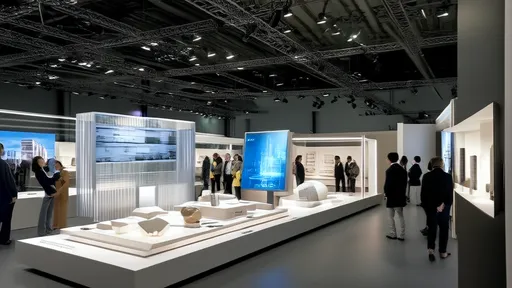
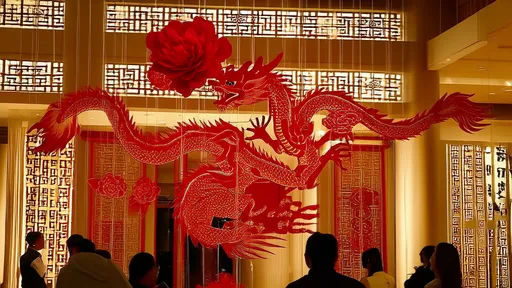
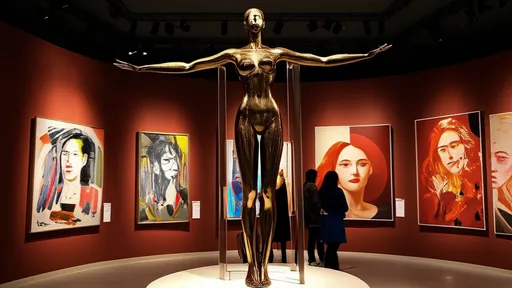
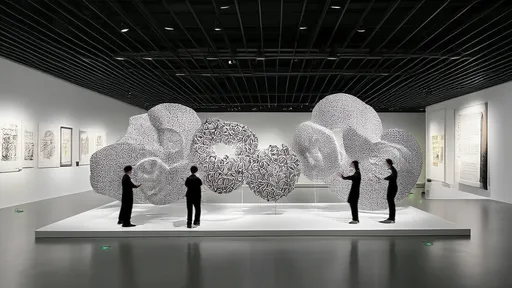
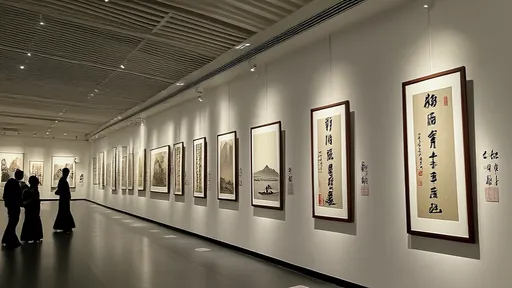
The golden autumn breeze carries more than just the crisp scent of fallen leaves through the ancient streets of Jinan; it brings with it the whispers of an artistic renaissance that recently captivated international audiences at the Macao International Art Biennale. For the first time in its cultural exchange history, Jinan presented a curated collection of contemporary artworks that seamlessly wove the city's profound heritage with avant-garde creative expressions, marking a significant milestone in its global cultural outreach.
Against the glittering backdrop of Macao's cosmopolitan art scene, Jinan's exhibition stood out not merely as a regional presentation but as a sophisticated statement of cultural diplomacy. The city's delegation, comprising both established masters and emerging talents, demonstrated how traditional Shandong craftsmanship could converse fluently with global contemporary art trends. The strategic positioning of Jinan's pavilion adjacent to European and American exhibitions was no coincidence but a deliberate move to position the city as an equal player in international cultural discourse.
Cultural Roots Meet Contemporary Vision
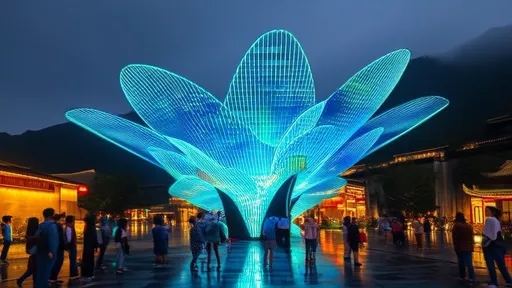
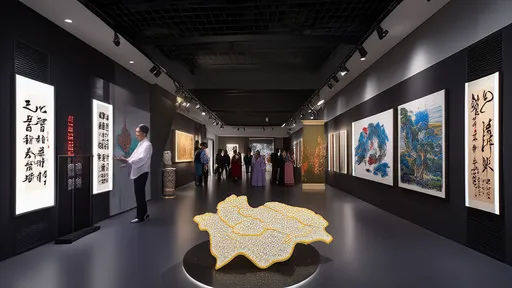
The exhibition's centerpiece, a monumental installation titled "Springs of Memory," captured the essence of Jinan's identity as the "City of Springs" while addressing universal themes of environmental conservation. Local artist Zhang Wei collaborated with digital media specialists to create an immersive experience where visitors could virtually explore Jinan's famous Baotu Spring while sensor technology responded to their movements with corresponding water ripple effects. This fusion of traditional natural elements with cutting-edge technology exemplified Jinan's approach to cultural presentation - honoring heritage while embracing innovation.
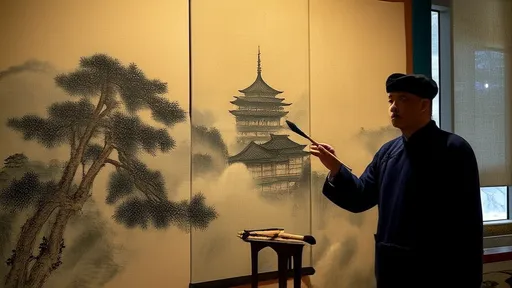
Another remarkable work that drew international curators' attention was "Mountain Shadows," a series of ink paintings by young artist Li Ming that reimagined Jinan's iconic Thousand Buddha Mountain through abstract expressionism. The pieces maintained the spiritual essence of traditional Chinese landscape painting while incorporating bold color choices and compositional techniques that resonated with Western abstract traditions. Art critic Maria Gonzalez from Spain noted, "What makes Jinan's contemporary art compelling is its authentic dialogue between deep cultural roots and global visual language - it feels neither derivative nor provincial."
Strategic Cultural Positioning
Behind the artistic presentations lay a meticulously crafted city promotion strategy developed by Jinan's Cultural and Tourism Bureau in partnership with Shandong University's Cultural Research Institute. The initiative represented a significant shift from traditional tourism marketing toward what experts term "experiential cultural diplomacy." Rather than simply promoting tourist attractions, Jinan used artistic excellence as an entry point to stimulate deeper interest in the city's cultural ecosystem.
Professor Chen Wei, who led the strategy development team, explained the philosophical underpinning: "In the global competition for cultural attention, cities must move beyond superficial branding. Our research indicated that international audiences, particularly the culturally sophisticated demographic we target, respond more profoundly to artistic excellence that reveals authentic cultural narratives. The artworks become ambassadors that create emotional connections far more powerful than conventional advertising."
The selection process for participating artists reflected this strategic approach. Instead of choosing solely based on artistic merit, the curatorial committee sought creators whose work could serve as cultural translators - artists capable of interpreting Jinan's unique characteristics in ways that would resonate across cultural boundaries. This resulted in a diverse collection that included everything from ceramic sculptures inspired by Li Qingzhao's poetry to digital art exploring the city's architectural evolution.
Economic and Cultural Synergy
The biennale participation formed part of Jinan's broader "Culture+" economic development strategy, which positions cultural assets as drivers for urban regeneration and international business attraction. Early indicators suggest the approach is yielding dividends, with several European art institutions expressing interest in hosting Jinan art exhibitions and cultural delegations from France and Germany scheduling fact-finding visits to explore potential creative industry partnerships.
What makes Jinan's case particularly noteworthy is how the city has leveraged its specific cultural advantages rather than adopting generic global city marketing formulas. The emphasis on spring culture, literary heritage, and distinctive Shandong artistic traditions gives the promotion campaign authentic character while the contemporary interpretations prevent it from appearing as mere cultural preservation. This balance between tradition and innovation has become Jinan's signature approach in the competitive landscape of global city branding.
International relations expert Dr. James Fitzgerald observed, "Jinan demonstrates how secondary Chinese cities can craft distinctive international identities without mimicking Beijing or Shanghai. The focus on specific cultural strengths, presented through globally accessible artistic language, creates a unique positioning that attracts serious cultural and economic interest rather than just casual tourism."
Sustaining the Momentum
The Macao biennale represents just the beginning of Jinan's ambitious international cultural agenda. The city's cultural authorities have announced plans for subsequent participations in major art events across Southeast Asia and Europe, with each presentation tailored to highlight different aspects of Jinan's cultural portfolio. A dedicated fund has been established to support artists creating works for international exhibitions, while cultural exchange programs with partner cities are being expanded to include residencies for foreign artists in Jinan.
Perhaps most significantly, the success in Macao has inspired broader thinking about culture's role in urban development. City planners are now integrating public art and cultural spaces more deliberately into urban regeneration projects, recognizing that vibrant cultural scenes contribute not only to international image but to residents' quality of life and urban vitality. The former industrial area near Tianqiao District is being transformed into a creative cluster, with studios and exhibition spaces designed to foster the next generation of artists who can represent Jinan on global stages.
As the artworks return from Macao to their permanent home in the newly expanded Jinan Art Museum, they carry with them more than just the applause of international audiences. They embody a city's confident stride onto the world cultural stage, demonstrating how regional Chinese cities can leverage their unique heritage while engaging equally with global contemporary discourse. The springs of Jinan continue to flow, nourishing not just the land but the creative spirit that now reaches across borders and oceans.
By /Oct 24, 2025
By /Oct 24, 2025
By /Oct 24, 2025
By Jessica Lee/Oct 24, 2025
By Emma Thompson/Oct 24, 2025
By /Oct 24, 2025
By James Moore/Oct 24, 2025
By /Oct 24, 2025
By /Oct 24, 2025
By /Oct 24, 2025
By /Oct 24, 2025
By /Oct 24, 2025
By /Oct 24, 2025
By Sarah Davis/Oct 24, 2025
By /Oct 24, 2025

By /Oct 24, 2025
By /Oct 24, 2025
By /Oct 24, 2025
By /Oct 24, 2025

By /Oct 24, 2025