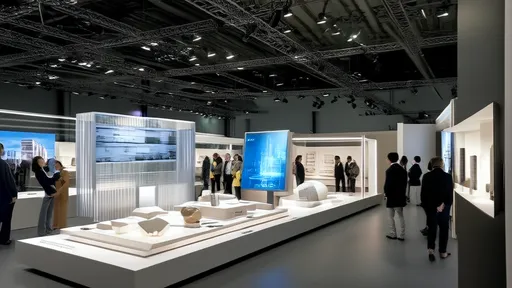
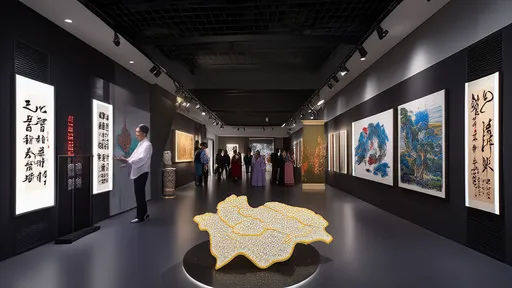
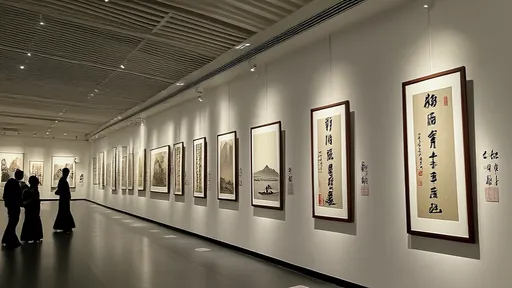
Amidst the historic walls of Nanjing, where ancient dynasties once flourished, a contemporary revolution is unfolding. The Nanjing Art Fair has launched its most ambitious thematic exhibition to date, titled "The Rise of Female Power: New Perspectives in Contemporary Art," challenging traditional narratives and celebrating the formidable creative energy of women artists. This groundbreaking showcase, occupying the entire west wing of the convention center, represents more than just an art exhibition; it stands as a cultural manifesto for our times.
The curatorial vision behind this exhibition is both profound and timely. Curator Dr. Li Wen, herself a prominent art historian, spent nearly two years assembling what she describes as "a chorus of feminine voices that have been waiting centuries to be heard." Walking through the galleries, one immediately senses this is not merely a collection of artworks by women, but a deliberate and powerful statement about the evolution of female representation in art. The exhibition deliberately avoids the traditional "women's art" categorization, instead presenting these works as essential contributions to the broader contemporary art dialogue.
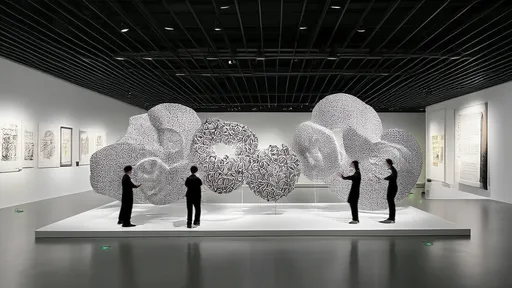
The exhibition opens with what many are calling its centerpiece - a monumental installation by Shanghai-based artist Xia Yulan titled "Woven Histories." The work consists of thousands of silk threads suspended from the ceiling, each representing a woman whose contributions to Chinese culture have been overlooked by historical records. As visitors walk through the delicate web, motion sensors trigger audio recordings of women's voices reciting poetry, political speeches, and personal stories. The effect is both haunting and empowering, creating what one critic described as "walking through the collective consciousness of generations."
Another standout work comes from multimedia artist Chen Anqi, whose video installation "The Unseen Labor" documents the daily lives of female factory workers in Southern China. Chen spent six months living among her subjects, capturing not just their work but their dreams, frustrations, and quiet moments of joy. The three-channel projection surrounds viewers with these women's stories, challenging conventional notions of what constitutes "important" subject matter in contemporary art. "These are the women who power China's economic miracle," Chen explained during the opening. "Their stories deserve the same artistic consideration as any political leader or cultural icon."
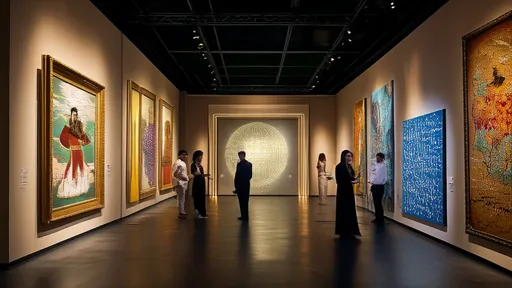
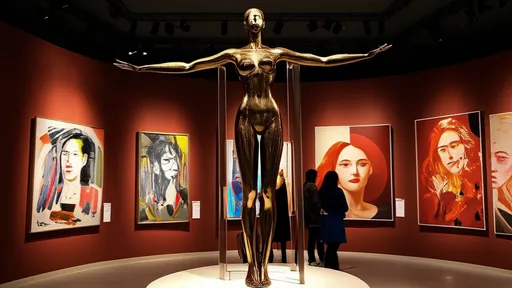
The generational dialogue within the exhibition provides one of its most compelling aspects. Established masters like the 78-year-old painter Zhou Ming share space with emerging artists fresh from art school. Zhou's series "Redefining the Female Gaze" reinterprets classical Chinese paintings, inserting female perspectives into scenes traditionally depicted through male eyes. Her work hangs alongside digital creations by 25-year-old Wang Jie, whose augmented reality pieces allow viewers to use their smartphones to uncover hidden narratives within seemingly straightforward portraits.
International perspectives enrich the exhibition significantly. Korean artist Kim Soo-jin's interactive sculpture "Breathing Space" invites visitors to literally enter a representation of the female body, while British-Chinese artist Fiona Tan's photographic series "Diaspora Daughters" explores the complex identities of second-generation immigrant women. These works create a global conversation about female experience that transcends national boundaries while remaining deeply personal in their execution.
Perhaps the most controversial section of the exhibition deals explicitly with the female body and its representation. Artist Liu Yuan's "Blood Cycle" consists of twelve ceramic vessels, each representing a different phase of the menstrual cycle. The work challenges centuries of taboo surrounding discussions of women's biological experiences in artistic contexts. "We've seen endless artistic representations of male experience and physiology," Liu stated during a panel discussion. "It's time for women's biological reality to claim its space in the gallery."
The technological innovation on display throughout the exhibition demonstrates how female artists are not just participating in but actively shaping the future of artistic media. Virtual reality experiences, blockchain-based digital art, and AI-generated installations all feature prominently, with artists like Zhang Wei pushing the boundaries of what constitutes art in the digital age. Her work "Algorithmic Matriarchy" uses machine learning to generate ever-evolving portraits based on databases of historical female leaders, creating what she describes as "a digital ancestry of female power."
Educational programs accompanying the exhibition have drawn particular praise from visitors and critics alike. Daily workshops led by exhibiting artists, scholarly symposia on feminist art history, and guided tours specifically designed for school groups have made the exhibition accessible to diverse audiences. The fair organizers reported that weekend attendance has consistently exceeded capacity, with visitors often spending four to five hours fully immersed in the exhibition.
The commercial success of the exhibition has also made a significant statement about the market for art by women. Several works sold within the first hour of the VIP preview, with prices ranging from modest sums for emerging artists to six-figure amounts for established names. Gallery representatives noted increased interest from both private collectors and institutions, suggesting a lasting impact on how female artists are valued in the commercial art world.
Critical reception has been overwhelmingly positive, though not without its thoughtful critiques. Art Journal correspondent Michael Reynolds wrote: "While the exhibition rightly celebrates female achievement, its greatest strength lies in its refusal to present a monolithic 'female experience.' The works diverge, contradict, and challenge each other, creating a rich tapestry that defies easy categorization." Some conservative critics have questioned what they see as the "political agenda" of the exhibition, though even these voices have acknowledged the technical mastery and innovation on display.
The timing of this exhibition coincides with broader cultural shifts in China's art world. Major museums are increasingly examining their acquisition policies and exhibition histories regarding gender representation. The National Art Museum of China recently announced a five-year initiative to increase representation of women artists in its permanent collection, while several university art departments have begun revising their curricula to include more female artists and theorists.
As the exhibition continues through its three-month run, its impact appears to be extending beyond the art world. Social media has been flooded with images and discussions of the works, particularly among younger Chinese women who see the exhibition as validation of their own aspirations. Corporate sponsors, initially cautious about supporting what some perceived as a "political" exhibition, have now doubled their funding in response to the overwhelming public response.
The legacy of "The Rise of Female Power" may ultimately be measured in the conversations it has started rather than the artworks themselves. As one visitor noted in the exhibition's comment book: "I brought my young daughter here today. She saw women creating, leading, and defining beauty on their own terms. That lesson is more valuable than any art history textbook." In giving space to female perspectives that have long been marginalized, the Nanjing Art Fair has not just mounted another exhibition - it has helped rewrite the narrative of contemporary art itself.
Looking forward, the exhibition's organizers have announced plans for an international tour, with stops confirmed in Berlin, New York, and Tokyo. The accompanying catalog, featuring essays by leading feminist art theorists and reproductions of all exhibited works, has already sold out its first printing. What began as a thematic exhibition at a regional art fair has grown into a global movement, proving that the question of female representation in art is not just timely but essential to understanding our contemporary moment.
By /Oct 24, 2025
By /Oct 24, 2025
By /Oct 24, 2025
By Jessica Lee/Oct 24, 2025
By Emma Thompson/Oct 24, 2025
By /Oct 24, 2025
By James Moore/Oct 24, 2025
By /Oct 24, 2025
By /Oct 24, 2025
By /Oct 24, 2025
By /Oct 24, 2025
By /Oct 24, 2025
By /Oct 24, 2025
By Sarah Davis/Oct 24, 2025
By /Oct 24, 2025

By /Oct 24, 2025
By /Oct 24, 2025
By /Oct 24, 2025
By /Oct 24, 2025
By /Oct 24, 2025