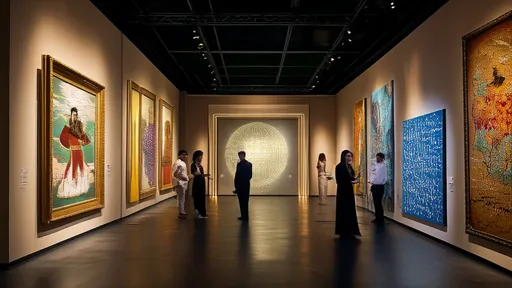
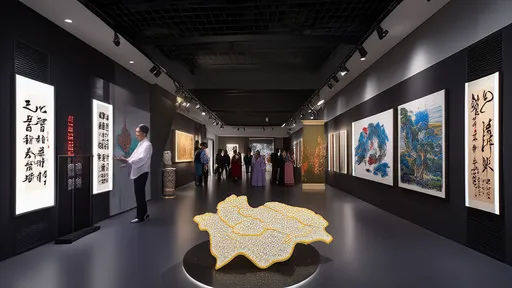
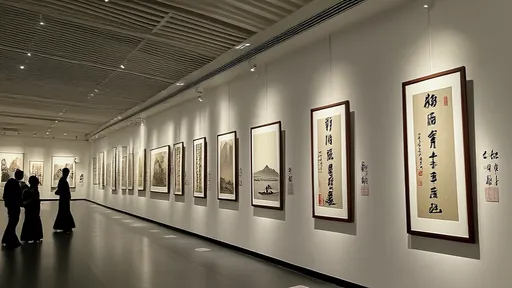
Under the soft glow of gallery lights that mimic the morning mist over karst mountains, visitors to the Guilin Art Festival are experiencing more than an exhibition—they are walking through a living chapter of Chinese art history. The 40th-anniversary special exhibition of Huang Gesheng's monumental masterpiece, "The Hundred-Mile Li River Scroll," has become the centerpiece of the festival, drawing crowds into a panoramic journey that transcends time and space.
The air in the specially designed exhibition hall carries a palpable sense of reverence. Before the 200-foot scroll, viewers stand in silent contemplation, their eyes tracing the ink-washed peaks and winding waters that Huang captured with such devotion four decades ago. What makes this exhibition particularly significant is not merely the anniversary itself, but how it represents the enduring dialogue between an artist and his homeland—a conversation that began in 1982 and continues to resonate through Chinese contemporary art.
Huang Gesheng, now recognized as one of China's most important living painters, was in his early thirties when he embarked on this ambitious project. The creation of the scroll represented not just an artistic challenge but a personal pilgrimage. For months, he traveled along the Li River, sketching and absorbing the landscape that has inspired Chinese poets and painters for centuries. His approach was revolutionary for its time—combining traditional Chinese ink techniques with a modern compositional perspective that captured the river's entirety rather than selected vignettes.
The exhibition curator, Dr. Lin Wei, explains the scroll's enduring significance: "When Huang created this work, he wasn't just painting scenery—he was documenting the soul of a landscape that embodies the essence of Chinese cultural identity. The Li River has appeared in countless artworks, but never with this comprehensive vision that captures both its grandeur and its intimate moments."
Walking through the exhibition, visitors experience the scroll in segments that correspond to the river's natural progression, with each section accompanied by Huang's original field sketches and notes. This curatorial choice creates a fascinating dialogue between the finished masterpiece and the raw observational work that preceded it. The sketches show the artist's struggle to capture the river's ever-changing mood—the way morning fog clings to limestone peaks, the reflection of bamboo groves in still waters, the gentle movement of fishing boats at dusk.
What becomes clear throughout the exhibition is how Huang's masterpiece broke from tradition while honoring it. Previous depictions of the Li River tended to focus on its most famous vistas—the view from Xianggong Mountain or the iconic scene featured on the 20-yuan note. Huang instead presented the river as a continuous narrative, with equal attention given to its famous stretches and its quiet, hidden corners. This democratic approach to landscape representation was quietly radical, suggesting that every part of the river held equal beauty and significance.
The technical achievement of the scroll remains staggering even by today's standards. Huang employed multiple perspective points within a single continuous composition, guiding the viewer's eye along the river's course while maintaining compositional harmony. He mastered the difficult art of ink wash to create depth and atmosphere, using variations in tone to suggest distance and the play of light. The subtle coloration—achieved through mineral pigments carefully ground and mixed by hand—adds warmth without overpowering the essential ink work.
Contemporary artists participating in the Guilin Art Festival have responded to Huang's legacy with admiration and thoughtful commentary. Several installations in adjacent galleries directly reference The Hundred-Mile Li River Scroll, reinterpreting its themes through digital media, photography, and experimental ink work. This intergenerational dialogue highlights how Huang's work continues to inspire new approaches to landscape art, proving the scroll's relevance four decades after its creation.
For local residents, the exhibition carries special meaning. Many elderly visitors have been observed pointing out recognizable locations along the scroll, sharing memories of how the landscape has changed—or remarkably, how it has remained the same. This living connection between art and community gives the exhibition an emotional depth that transcends academic appreciation. The scroll serves as both artwork and historical document, preserving a vision of the Li River that continues to shape Guilin's identity.
Educational programs accompanying the exhibition have proven particularly popular. Daily workshops on Chinese ink painting techniques attract students and amateur artists, while scholarly lectures examine Huang's contribution to the evolution of landscape painting. These programs demonstrate the exhibition's role not just as display but as active cultural engagement—ensuring that traditional arts continue to find new practitioners and audiences.
The timing of this anniversary exhibition coincides with renewed interest in traditional Chinese arts among younger generations. Gallery staff report significant attendance from university students and young professionals, many of whom document their experience on social media platforms. This contemporary engagement with a forty-year-old masterpiece suggests a cultural renaissance—a return to traditional forms that nevertheless speaks to modern sensibilities.
As the Guilin Art Festival continues through the season, Huang's scroll remains its beating heart. Visitors from across China and international tourists alike find themselves drawn to this comprehensive vision of one of the world's most beautiful rivers. The exhibition does more than celebrate an artist's achievement—it invites viewers to see the landscape through his eyes, to understand the deep connection between people and place that has defined Chinese culture for millennia.
In an era of rapid urbanization and environmental change, The Hundred-Mile Li River Scroll serves as both celebration and preservation. It captures a moment in time while speaking to eternal values of beauty, harmony, and our relationship with the natural world. As one young visitor remarked after viewing the scroll: "This isn't just a painting—it's a memory of what we must protect, and a vision of what we can aspire to."
The exhibition continues through the end of the month, with special guided tours available on weekends. For those unable to visit in person, a digital interactive version of the scroll will be available on the Guilin Art Museum website beginning next week, ensuring that Huang Gesheng's masterpiece continues to inspire audiences worldwide.
By /Oct 24, 2025

By /Oct 24, 2025
By /Oct 24, 2025
By Jessica Lee/Oct 24, 2025
By Emma Thompson/Oct 24, 2025
By /Oct 24, 2025
By James Moore/Oct 24, 2025
By /Oct 24, 2025
By /Oct 24, 2025
By /Oct 24, 2025
By /Oct 24, 2025
By /Oct 24, 2025
By /Oct 24, 2025
By Sarah Davis/Oct 24, 2025
By /Oct 24, 2025

By /Oct 24, 2025
By /Oct 24, 2025
By /Oct 24, 2025
By /Oct 24, 2025
By /Oct 24, 2025