From Russia to China: The Expressive Brushwork and Oriental Spirit in Zheng Guangxu's Oil Paintings

Oct 24, 2025 By

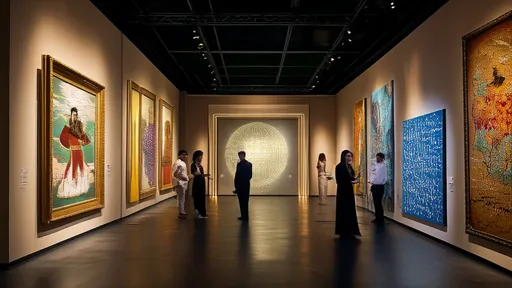
In the hushed galleries where East meets West, a remarkable artistic dialogue unfolds through the brushstrokes of Zheng Guangxu. The exhibition From Russia to China: The Lyrical Expression and Eastern Spirit in Zheng Guangxu's Oil Paintings presents more than just a collection of artworks—it offers a profound journey across cultural landscapes, where Russian academic rigor gracefully merges with Chinese philosophical depth.


Zheng Guangxu stands as a unique bridge between two artistic traditions that have long fascinated and influenced each other. Having studied extensively in Russia during the formative years of his career, Zheng absorbed the technical mastery and emotional intensity characteristic of Russian realist painting. Yet, beneath this surface of Western technique, the artist's Chinese heritage remained the steady heartbeat of his creative expression. What emerges in his mature work is not merely a fusion of styles, but a genuine synthesis—a new visual language that speaks equally to the soul of both traditions.


The Russian Foundation: More Than Technique

Zheng's time in Russia provided him with more than just superior technical skills in oil painting. He immersed himself in the Russian approach to color theory, where hues carry emotional weight and psychological depth. The dramatic contrasts and rich, earthy palettes that characterize Russian masters like Repin and Levitan can be detected in Zheng's work, yet they undergo a subtle transformation. Where Russian realism often leans toward social commentary or narrative drama, Zheng redirects this emotional intensity toward more contemplative ends. His brushwork maintains the physical presence and textural complexity valued in Russian academies, but the spirit behind each stroke begins to shift toward Eastern sensibilities.


This technical foundation becomes particularly evident in Zheng's treatment of light. Like the Russian masters who inspired him, he understands light not merely as an optical phenomenon but as an emotional conductor. However, while Russian painters often use light to dramatize human struggle or historical moments, Zheng employs it to reveal the quiet dignity of ordinary scenes—the way sunlight filters through autumn leaves, or the gentle glow of twilight on a village path. The technique remains Western, but the intention becomes distinctly Eastern.


The Emergence of Xieyi in Oil Painting

The most revolutionary aspect of Zheng's work lies in his adaptation of the Chinese aesthetic principle of xieyi—often translated as "writing meaning" or "sketching ideas"—to the medium of oil painting. Traditionally associated with ink wash painting, xieyi emphasizes spiritual resonance over physical likeness, the essence of a subject rather than its detailed representation. Zheng achieves this through what might be called "calculated spontaneity" in his oil technique.


His brushstrokes maintain the viscosity and richness inherent to oil paints while acquiring the rhythmic flow of Chinese calligraphy. Watching his paintings up close, one can trace the dance of his brush—sometimes swift and decisive, other times lingering and contemplative. This approach allows him to capture the fleeting moment when a landscape's spirit reveals itself, much like the traditional Chinese painter seeking to express the "qi yun" or spirit resonance of his subject. The mountains in his paintings don't just show geological formations; they embody the enduring stability that Chinese philosophy associates with mountains. The water in his streams doesn't merely reflect light; it carries the fluid wisdom of Daoist thought.


Philosophical Underpinnings: The Eastern Spirit

Beyond technical synthesis, Zheng's work embodies what might be called an Eastern worldview expressed through Western materials. His compositions often reflect the Daoist concept of wu wei—effortless action—where elements arrange themselves in naturally harmonious relationships rather than forced geometric structures. The empty spaces in his paintings are never merely background; they breathe with the same vitality as the painted forms, echoing the Chinese appreciation for the interplay between fullness and emptiness.


This philosophical depth becomes particularly evident in his series depicting the Chinese countryside. Unlike the romanticized rural scenes common in Western painting, Zheng's villages feel inhabited by quiet wisdom. The aging walls of traditional houses aren't portrayed as decaying structures but as repositories of memory and continuity. The figures that occasionally appear in these landscapes are never the heroic individuals of Western art, but rather integrated elements of the natural world, moving through their environments with a sense of belonging that transcends individual identity.


Cultural Dialogue as Personal Journey

What makes Zheng's artistic synthesis particularly compelling is that it mirrors his personal journey between cultures. Having lived extensively in both Russia and China, he doesn't approach either tradition as an outsider looking in. His Russian training wasn't an academic exercise but a genuine immersion, just as his Chinese sensibility isn't a conscious affectation but his native tongue, visually speaking. This authentic dual belonging allows him to avoid the pitfalls of superficial exoticism or forced hybridization.


The emotional authenticity in his work speaks to anyone who has ever stood between cultures, whether literally or metaphorically. His paintings don't represent a compromise between Eastern and Western traditions, but rather demonstrate how deep engagement with multiple cultural streams can produce something entirely new—an artistic vision that couldn't have emerged from either tradition alone.


The Universal in the Particular

While deeply rooted in specific cultural traditions, Zheng's work ultimately transcends cultural boundaries to address universal human experiences. His depictions of seasonal changes—the fragile blossoms of spring, the lush fullness of summer, the contemplative beauty of autumn, the stark clarity of winter—speak to our shared experience of time's passage. His treatment of light and shadow resonates with our common understanding of transience and permanence.


This universal appeal suggests that the most profound cultural dialogues don't dilute distinct traditions but rather uncover their shared humanity. Zheng demonstrates that the Russian soul and Chinese spirit, when genuinely engaged, don't contradict but complement each other. The emotional depth of Russian art finds its contemplative counterpart in Chinese philosophy, while the spiritual abstraction of Chinese aesthetics gains physical presence through Russian technique.


Legacy and Looking Forward

As contemporary art becomes increasingly globalized, Zheng Guangxu's work offers a timely model of how cultural exchange might proceed with depth and mutual respect. In an era where superficial borrowing often passes for cross-cultural engagement, his serious dedication to mastering multiple traditions before synthesizing them provides an inspiring alternative. His paintings suggest that the future of global art lies not in homogenization, but in the kind of deep, thoughtful dialogue that preserves the integrity of each tradition while creating new possibilities.


The exhibition not only showcases Zheng's remarkable technical and philosophical achievements but also poses important questions about cultural identity in an interconnected world. How do we honor our roots while embracing other traditions? How do we maintain authenticity while evolving creatively? Zheng's body of work suggests that the answers lie not in choosing between traditions, but in engaging with them so deeply that they become inseparable parts of a unified artistic vision.


Through his masterful synthesis of Russian oil painting technique and Chinese aesthetic philosophy, Zheng Guangxu has created more than beautiful paintings—he has charted a path for meaningful cross-cultural dialogue in the arts. His work stands as a testament to the creative possibilities that emerge when artists engage deeply with multiple traditions, reminding us that the most compelling art often appears at the intersections, in the fertile spaces between cultures where new visual languages are born.


Recommend Posts
Arts

From Russia to China: The Expressive Brushwork and Oriental Spirit in Zheng Guangxu's Oil Paintings

By /Oct 24, 2025

In the hushed galleries where East meets West, a remarkable artistic dialogue unfolds through the brushstrokes of Zheng Guangxu. The exhibition From Russia to China: The Lyrical Expression and Eastern Spirit in Zheng Guangxu's Oil Paintings presents more than just a collection of artworks—it offers a profound journey across cultural landscapes, where Russian academic rigor gracefully merges with Chinese philosophical depth.
Arts

Coexistence of Nature and Art: The Practice of Local Aesthetics in the Fine Arts Section of Guilin Art Festival"

By /Oct 24, 2025

Against the limestone peaks that have inspired poets for centuries, a new artistic dialogue is unfolding in Guilin. The Guilin Art Festival, with its thematic focus "Symbiosis of Nature and Art," presents a compelling case study in how contemporary art can engage with ancient landscapes without disrupting their inherent poetry. What emerges from this year's Fine Arts Section is not merely art placed in nature, but art that breathes with the landscape, creating what curators are calling "site-specific aesthetic practice."
Arts

Polytechnic University of Milan Architectural Works Debut at Silk Road Art Exhibition"

By /Oct 24, 2025

In a groundbreaking cultural exchange that bridges Italian design excellence with ancient Chinese heritage, Politecnico di Milano has unveiled its architectural masterpieces at the Silk Road Art Exhibition for the first time. The event, hosted at the Xi'an Contemporary Art Museum, represents a significant milestone in cross-cultural dialogue between Europe and Asia, bringing Renaissance-inspired architectural philosophy to the historical terminus of the Silk Road.
Arts

Tim Yip's Gazing" Photography Series Special Presentation at Nanjing Art Expo

By Jessica Lee/Oct 24, 2025

Tim Yip's "Gaze" photography series made a remarkable appearance at the Nanjing Art Expo, marking a significant moment in the contemporary art scene. The exhibition, which ran for ten days, attracted thousands of visitors, including art critics, collectors, and enthusiasts from across the globe. Yip, renowned for his Oscar-winning work in "Crouching Tiger, Hidden Dragon," has once again captivated audiences with his profound exploration of human emotion and cultural identity through the lens of his camera. The "Gaze" series, in particular, delves into the silent dialogues between subjects and their environments, creating a hauntingly beautiful narrative that resonates deeply with viewers.
Arts

Paper Installations and Composite Media: Visual Narratives Constructed in Chinese Paper-based Art Exhibitions

By Emma Thompson/Oct 24, 2025

In the hushed galleries of the National Art Museum, a quiet revolution unfolds. The exhibition Paper Apparatus and Composite Media: The Visual Narrative of Chinese Paper-Based Art presents not merely artworks, but entire ecosystems of meaning, where the humble sheet of paper transforms into a dynamic protagonist in contemporary artistic discourse. This is not the paper of ancient scrolls or delicate calligraphy alone; this is paper as architecture, as memory, as a living, breathing entity in dialogue with the digital age and material history.
Arts

Artworks from 79 Countries Gather in Xi'an, Today's Silk Road Art Exhibition Promotes Inter-Civilizational Dialogue"

By /Oct 24, 2025

The ancient city of Xi'an, once the eastern terminus of the legendary Silk Road, is once again playing host to a grand convergence of cultures and artistic traditions. The "Today's Silk Road" International Art Exhibition has opened its doors, bringing together an unprecedented collection of 79 nations in a vibrant tapestry of visual dialogue that spans continents and centuries. Against the backdrop of Xi'an's historic city walls and modern galleries, this exhibition represents more than just a display of artistic mastery—it serves as a living bridge between civilizations, echoing the spirit of exchange that once defined the ancient trade routes.
Arts

Industry-Academia-Research-Exhibition-Creation: Nanjing Visual Arts College Builds a New Platform for Art Ecology"

By James Moore/Oct 24, 2025

In the heart of China's cultural landscape, Nanjing University of the Arts is pioneering an innovative educational model that seamlessly integrates industry, academia, research, exhibition, and creation into a cohesive ecosystem. This groundbreaking approach represents a significant departure from traditional art education, positioning the institution at the forefront of artistic innovation and cultural development.
Arts

Empowerment of Art through Technology: Digital Integration Exploration of Today's Silk Road Art Exhibition"

By /Oct 24, 2025

In the heart of Beijing's National Art Museum, a revolution is quietly unfolding. The exhibition titled "Technology Empowering Art: Digital Integration Exploration of the Silk Road Art Exhibition Today" represents more than just another cultural event—it marks a pivotal moment where ancient heritage and cutting-edge innovation converge to redefine how we experience art. Curated by the Ministry of Culture and Tourism in collaboration with leading tech institutions, this groundbreaking showcase demonstrates how digital tools can breathe new life into historical narratives while preserving their authenticity.
Arts

Chinese Paper Art Embarks on Global Tour: A Cultural Renaissance Unfolds

By /Oct 24, 2025

The world is about to witness an unprecedented cultural phenomenon as China launches its most ambitious international exhibition of paper-based art. Titled "The Eternal Scroll: Chinese Paper Art Through the Ages," this groundbreaking initiative represents a strategic effort to showcase the diversity and sophistication of China's paper media art through clustered global dissemination. For centuries, paper has served as more than mere material in Chinese culture—it has been the canvas for philosophical expression, the medium for spiritual contemplation, and the vehicle for artistic innovation. Now, this humble yet profound material prepares to tell its story on the world stage through what curators are calling "the most comprehensive presentation of Chinese paper art ever assembled for international audiences."
Arts

The Rise of Female Power: Nanjing Art Expo's Themed Exhibition Showcases New Perspectives in Contemporary Art

By /Oct 24, 2025

Amidst the historic walls of Nanjing, where ancient dynasties once flourished, a contemporary revolution is unfolding. The Nanjing Art Fair has launched its most ambitious thematic exhibition to date, titled "The Rise of Female Power: New Perspectives in Contemporary Art," challenging traditional narratives and celebrating the formidable creative energy of women artists. This groundbreaking showcase, occupying the entire west wing of the convention center, represents more than just an art exhibition; it stands as a cultural manifesto for our times.
Arts

Cross-Boundary Creation and Public Experience: ART Nanjing Breaks the Boundaries of Art

By /Oct 24, 2025

In the heart of China's ancient capital, a quiet revolution is unfolding across the art scene. ART Nanjing, an ambitious city-wide initiative, is systematically dismantling the traditional barriers that have long separated artistic disciplines while simultaneously bridging the gap between creators and their audiences. What began as scattered experimental projects has coalesced into a movement that is fundamentally reshaping how art is created, experienced, and understood in contemporary China.
Arts

From Print Media to Clusters: The Internationalization Path of Chinese Paper-based Art

By /Oct 24, 2025

In the quiet corners of Beijing's 798 Art District, a subtle revolution is unfolding. While digital screens dominate global communication, Chinese paper-based art is experiencing an unprecedented international renaissance. The journey from traditional paper media to clustered global networks represents one of the most fascinating cultural transformations of our time.
Arts

Musical 'Lion Boy' Closes Guilin Art Festival with the Spirit of Lion Dance Culture"

By /Oct 24, 2025

The curtains fell on the Guilin Arts Festival with a thunderous standing ovation as the final notes of the musical The Lion Awakens echoed through the auditorium. This wasn't just the conclusion of a performance; it was a powerful cultural statement, a vibrant fusion of contemporary stagecraft and ancient tradition that left an indelible mark on the international audience. The production, which served as the festival's grand finale, successfully positioned the age-old art of lion dancing, or Awakening Lion culture, not as a museum relic, but as a living, breathing, and profoundly relevant art form for the modern stage.
Arts

Silk Road Emotion, Beauty Together: Today's Silk Road International Art Invitational Exhibition"

By Sarah Davis/Oct 24, 2025

Silk Road Affection, Shared Beauty: The International Art Invitation Exhibition of the Silk Road Today opened its grand doors to the public last Friday at the National Art Museum, marking a significant milestone in cross-cultural artistic dialogue. The exhibition, which brings together over 200 artworks from 35 countries along the historic Silk Road routes, has already attracted thousands of visitors in its first week, with art critics praising its innovative approach to bridging ancient traditions with contemporary expressions.
Arts

Jinan's Cultural and Tourism Promotion through Art: The City's Strategy Behind the Macau Biennale"

By /Oct 24, 2025

The golden autumn breeze carries more than just the crisp scent of fallen leaves through the ancient streets of Jinan; it brings with it the whispers of an artistic renaissance that recently captivated international audiences at the Macao International Art Biennale. For the first time in its cultural exchange history, Jinan presented a curated collection of contemporary artworks that seamlessly wove the city's profound heritage with avant-garde creative expressions, marking a significant milestone in its global cultural outreach.
Arts

Ink Mist on Xuan Paper: How Dutch Audiences Interpret Chinese Contemporary Paper Art"

By /Oct 24, 2025

In the heart of Amsterdam, an exhibition titled "Beyond the Silk: Contemporary Chinese Paper Art" has quietly ignited a cultural conversation that transcends geographical boundaries. The dimly lit gallery space, with its carefully curated displays of xuan paper artworks, has become an unexpected bridge between Eastern artistic traditions and Western interpretive frameworks. Dutch visitors, known for their directness and pragmatic worldview, find themselves navigating the subtle nuances of ink washes and paper textures that have defined Chinese aesthetic sensibilities for centuries.
Arts

From Liangzhu to the Future: Hangzhou Biennale Outlines the Cultural Ecology under Technological Iteration"

By /Oct 24, 2025

In the heart of Hangzhou, where ancient canals whisper tales of millennia past, a bold new exhibition is mapping the trajectory of human civilization through the dual lenses of archaeological heritage and technological speculation. The Hangzhou Biennale, titled "From Liangzhu to the Future," presents a compelling narrative that weaves together the intricate threads of China's earliest known state-level society with visions of tomorrow's digital ecosystems.
Arts

The 40th Anniversary Special Exhibition of Huang Gesheng's 'Li River Hundred Miles' at Guilin Art Festival"

By /Oct 24, 2025

Under the soft glow of gallery lights that mimic the morning mist over karst mountains, visitors to the Guilin Art Festival are experiencing more than an exhibition—they are walking through a living chapter of Chinese art history. The 40th-anniversary special exhibition of Huang Gesheng's monumental masterpiece, "The Hundred-Mile Li River Scroll," has become the centerpiece of the festival, drawing crowds into a panoramic journey that transcends time and space.
Arts

Ecological Concern and Memory Reconstruction: The Rich Possibilities of Contemporary Paper Art in the Realm of Conceptual Dimensions

By /Oct 24, 2025

In the quiet corners of contemporary art galleries, a subtle revolution is unfolding. Paper, that most humble and ancient of materials, is undergoing a profound transformation, emerging as a powerful medium for exploring ecological consciousness and memory. The exhibition Ecological Care and Memory Reconstruction: The Rich Conceptual Possibilities of Contemporary Paper Art presents a compelling narrative that transcends traditional craft, positioning paper art at the forefront of conceptual discourse.
Arts

From Lijiang Hundred Miles" to "Magpie and Flower Autumn Colors": The Re-creation of Traditional Landscape Painting in Contemporary Times

By /Oct 24, 2025

In the hushed galleries where classical Chinese landscape paintings whisper tales of mist-shrouded mountains and meandering rivers, a quiet revolution is unfolding. The journey from One Hundred Li of the Li River to Autumn Colors on the Qiao and Hua Mountains represents more than mere geographical transition—it embodies the evolving soul of Chinese landscape art as contemporary artists reinterpret centuries-old traditions through modern sensibilities.